

What Makes Our Rumi Coloring Sheets Special?
Our Rumi pointing finger coloring sheets are created to be practical for home printing while still giving colorists enough detail to make each page interesting. The collection includes close-up portraits, half-body views, full-body poses, side profiles, and direct front-facing compositions.
The bold black-and-white line art keeps important details clear, especially around Rumi's hands and facial expressions, which are the main focus of this theme.
- Clear, defined outlines: The artwork is easy to follow, helping colorists work around fingers, facial features, clothing edges, and hair without the page becoming confusing.
- Multiple pointing poses: Rumi points upward, straight ahead, toward the viewer, and from different body angles.
- Varied facial expressions: Some pages show a smile, while others feature confidence, a smirk, or a raised chin for a more dramatic look.
- Printer-friendly layouts: The pages are suitable for normal home printing and can be used on standard printer paper or heavier coloring paper.
- Useful for different coloring tools: Crayons work well for simple fills, colored pencils are ideal for controlled shading, and markers can create stronger color contrast.
- Easy to personalize: Each pose can be given a different mood using clothing colors, skin tones, backgrounds, lighting, and decorative effects.
If you plan to use alcohol-based or very wet markers, place an extra sheet of paper behind the coloring page. This can help protect the surface underneath if ink passes through thinner printer paper.
Exploring the Rumi Pointing Finger Collection
This collection includes ten variations built around the same core gesture. Each one changes Rumi's expression, body direction, or camera angle, giving you several different ways to color and interpret the pose.
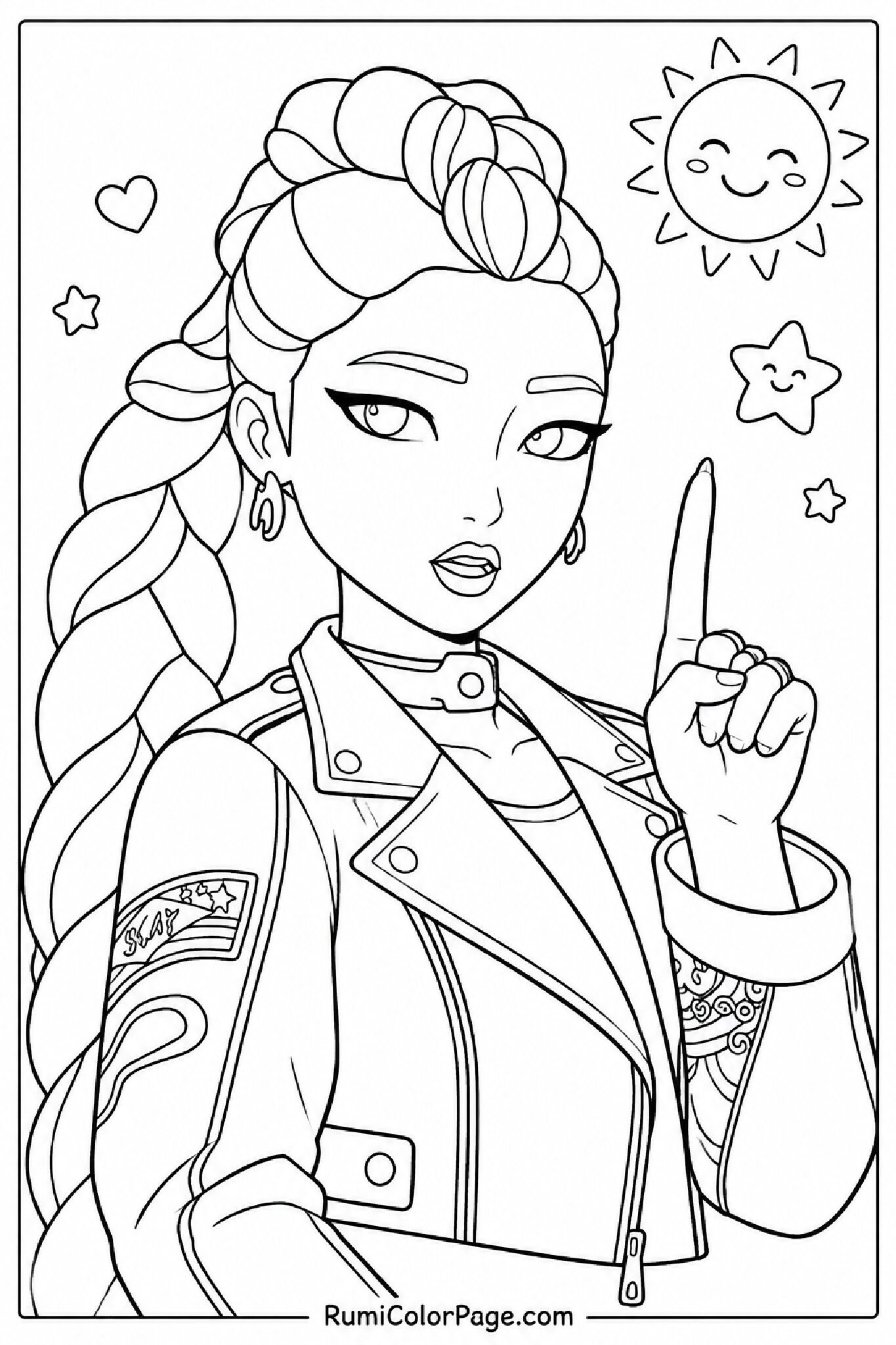
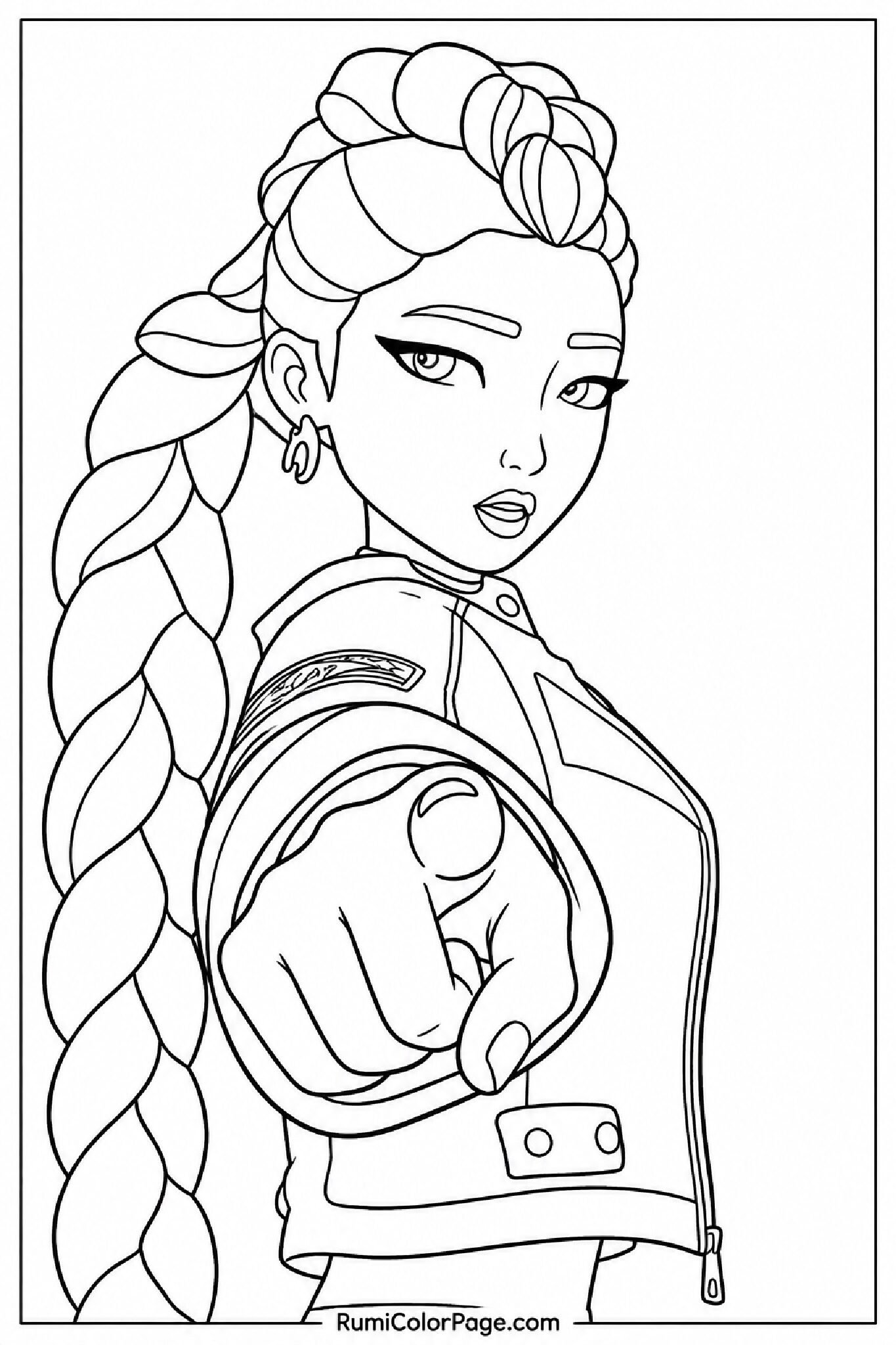
- Rumi Pointing Finger, Front View Close-Up: This close-up version puts the attention on Rumi's face and pointing hand. It is a good choice for practicing detailed coloring around the eyes, hairline, fingers, and facial highlights.
- Rumi Pointing Finger Confidently, Half-Body Slight Left Turn: The slight body turn adds natural movement to the pose. You can use darker shading along one side of the clothing to make the direction of the body more noticeable.
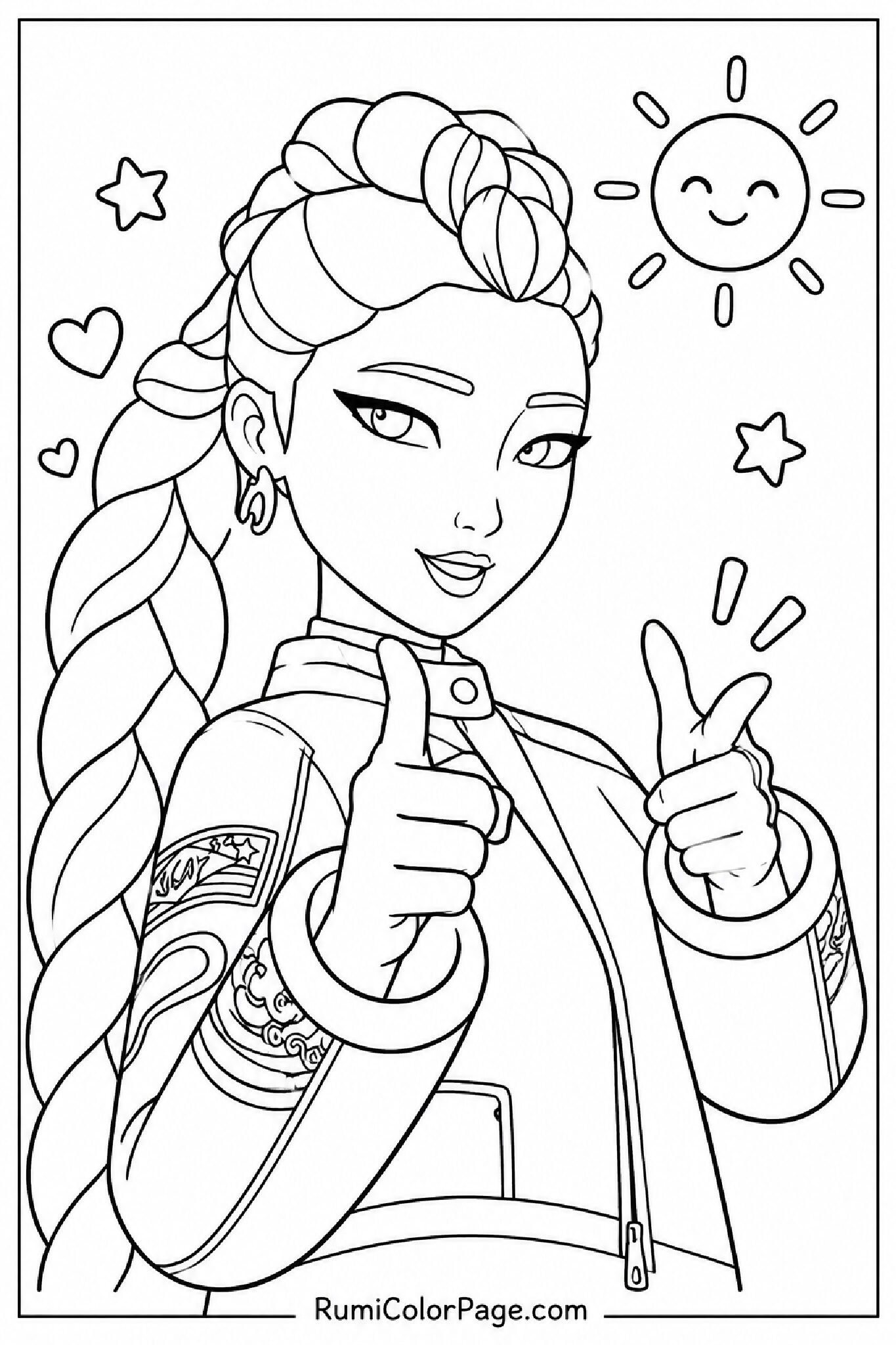
- Rumi Pointing Finger and Smiling, Straight-On Shoulders-Up: The smile gives this page a friendlier feeling. Bright colors and softer background tones can help reinforce the cheerful expression.
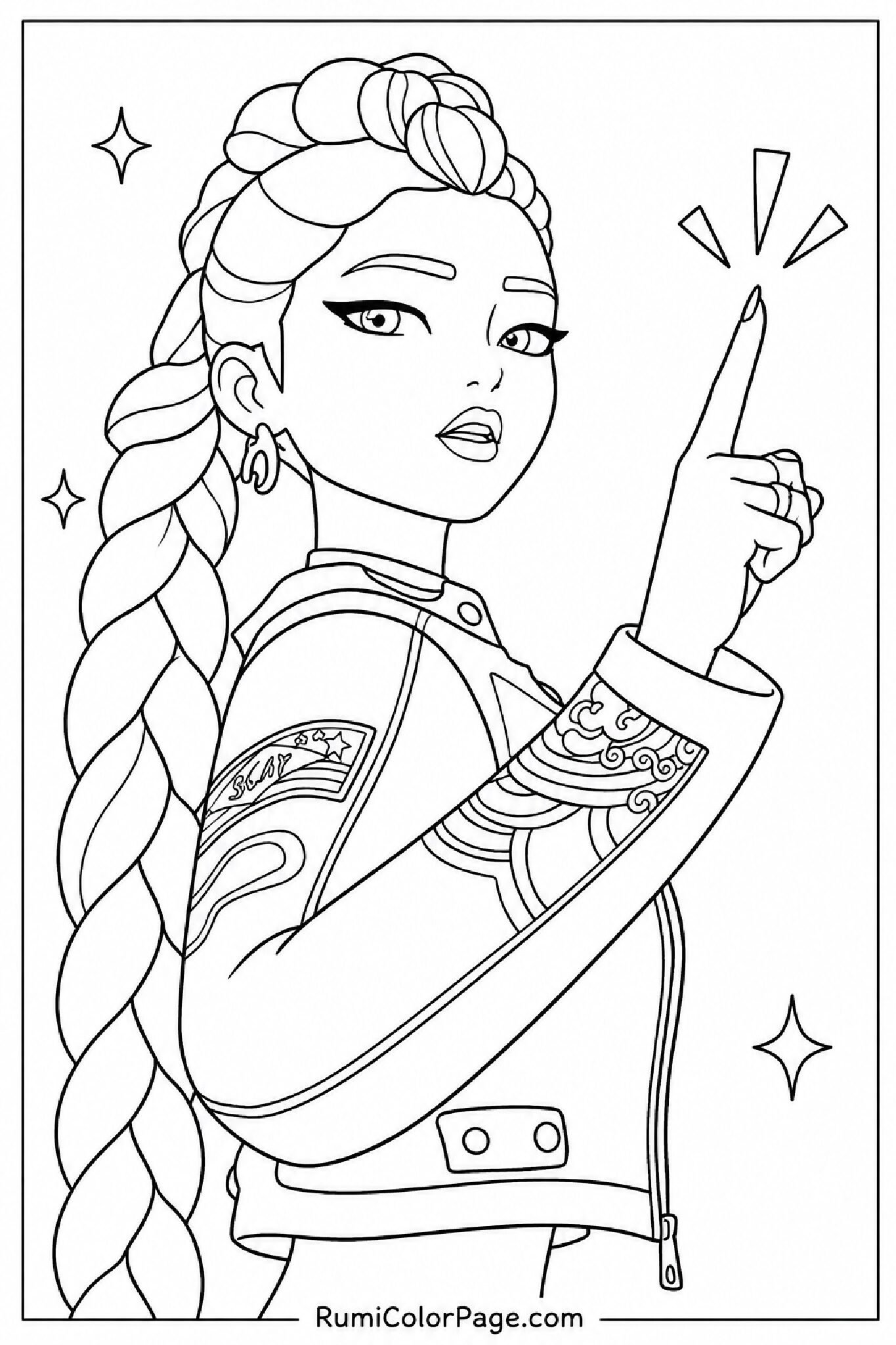
- Rumi Pointing Finger Upward, Close-Up Head Tilted Back: This upward gesture creates a different sense of direction and energy. It works especially well with light coming from above or with a bright background effect behind the raised finger.
- Rumi Pointing Finger, Full-Body Slight Right Lean: The full-body composition gives you more clothing and posture details to color. The leaning pose also creates extra opportunities to experiment with shadows around the legs, sleeves, and torso.
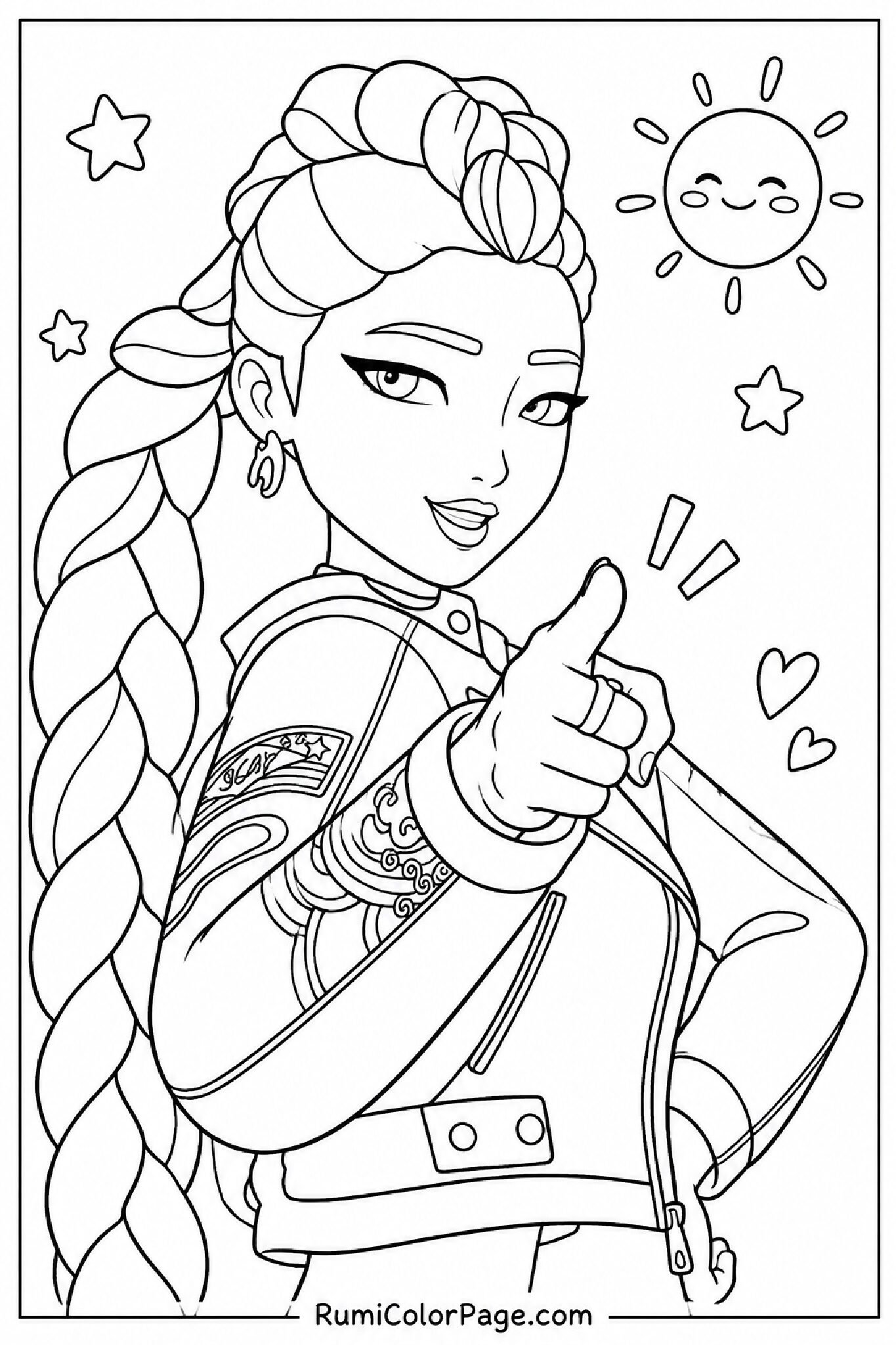
- Rumi Pointing Finger With a Smirk, Three-Quarter Angle Close-Up: The angled face and smirk create a playful, self-assured mood. Subtle shadows on one side of the face can make the three-quarter angle feel more dimensional.
- Rumi Pointing Finger Straight Ahead, Low Angle Close-Up: The low viewpoint can make the gesture look more dramatic. Consider using stronger contrast around the pointing hand so it appears closer to the viewer.
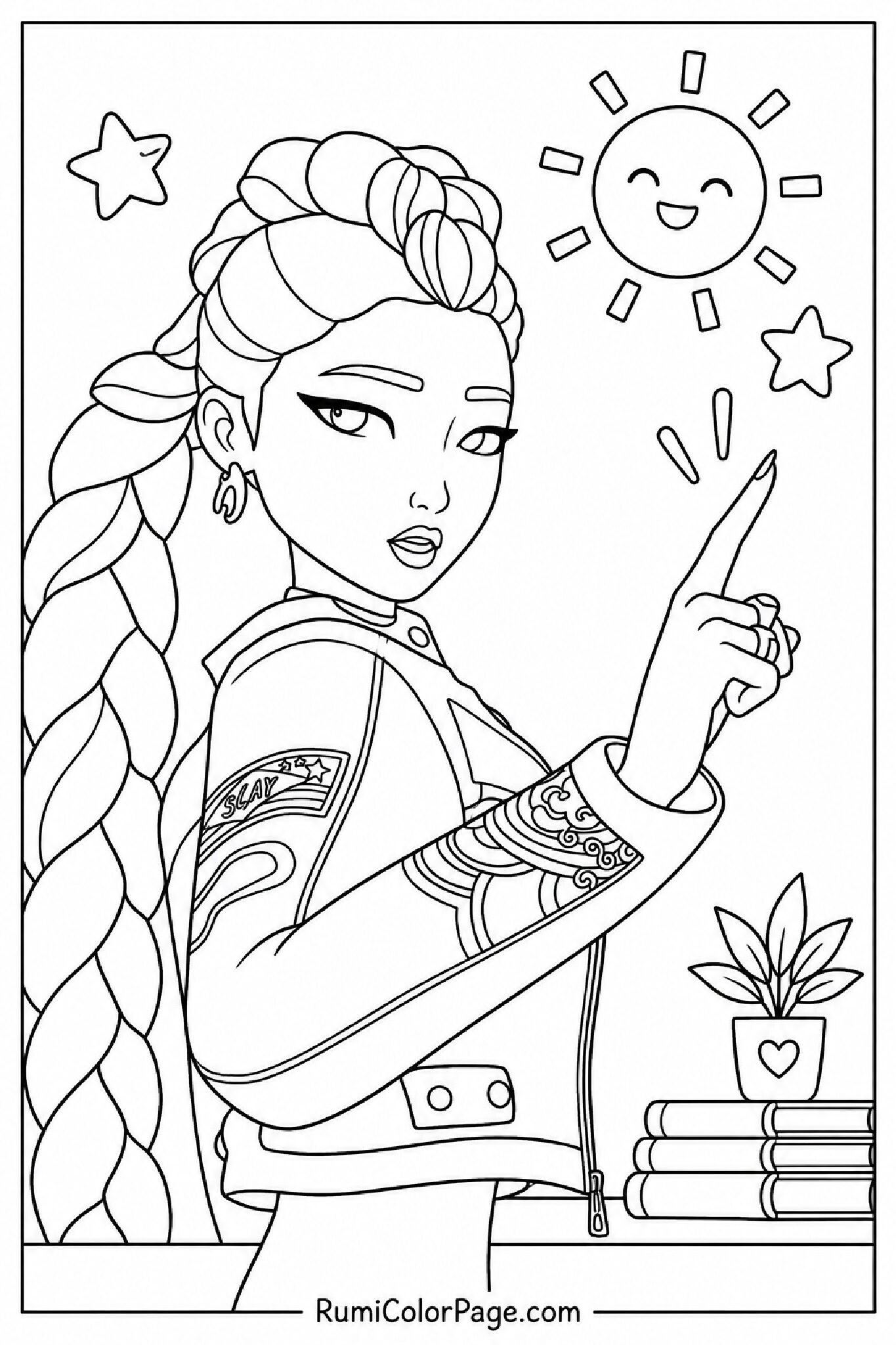
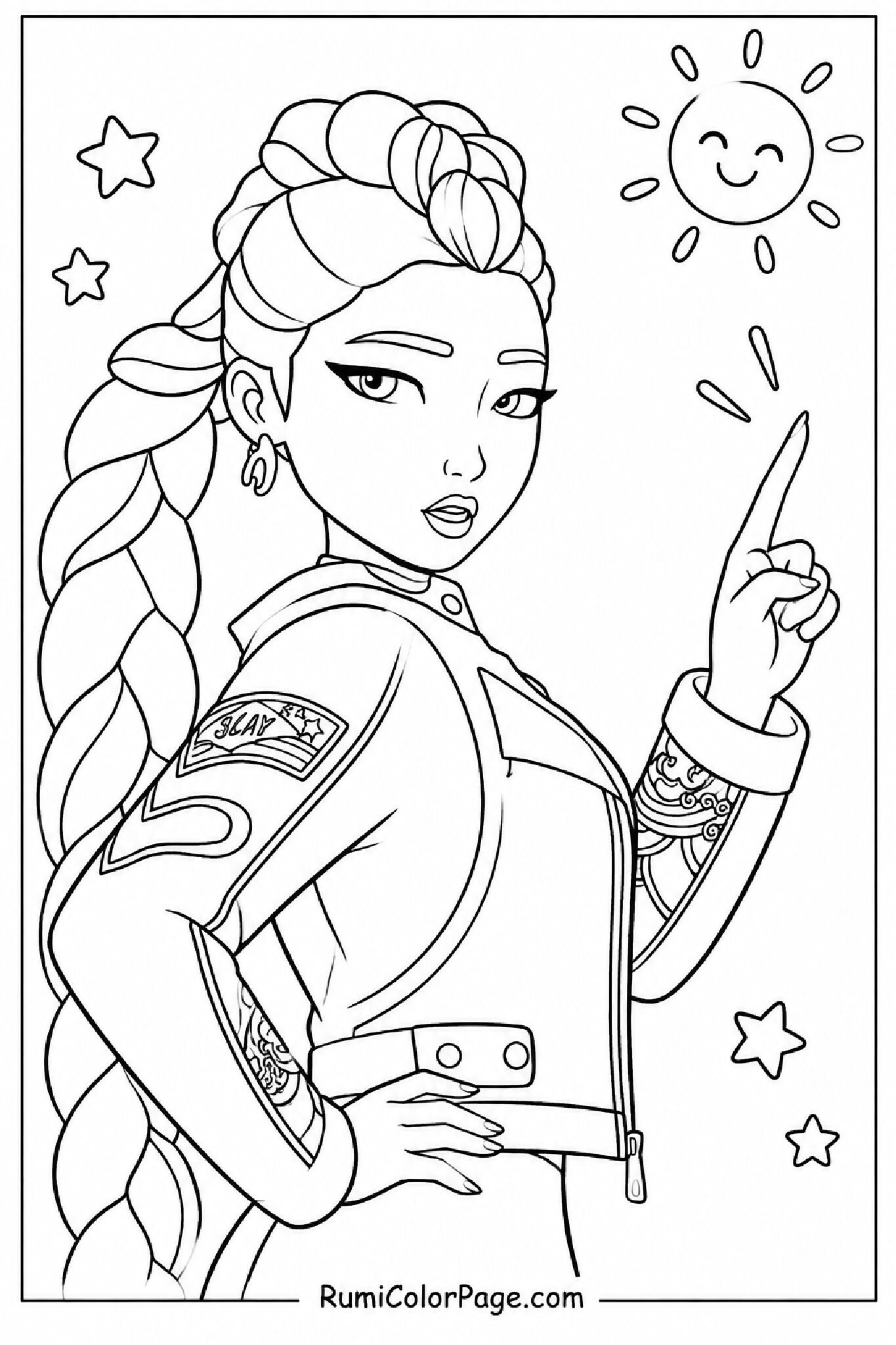
- Rumi Pointing Finger, Other Hand on Hip, Half-Body Side Profile: This pose combines the pointing gesture with a confident body stance. You can emphasize the silhouette by keeping the background simple and using clear color separation in the clothing.
- Rumi Pointing Finger, Chin Raised, Close-Up Chin Raised: The lifted chin creates a bold expression. Highlighting the jawline, neck, and underside of the chin can make the pose look more natural and three-dimensional.
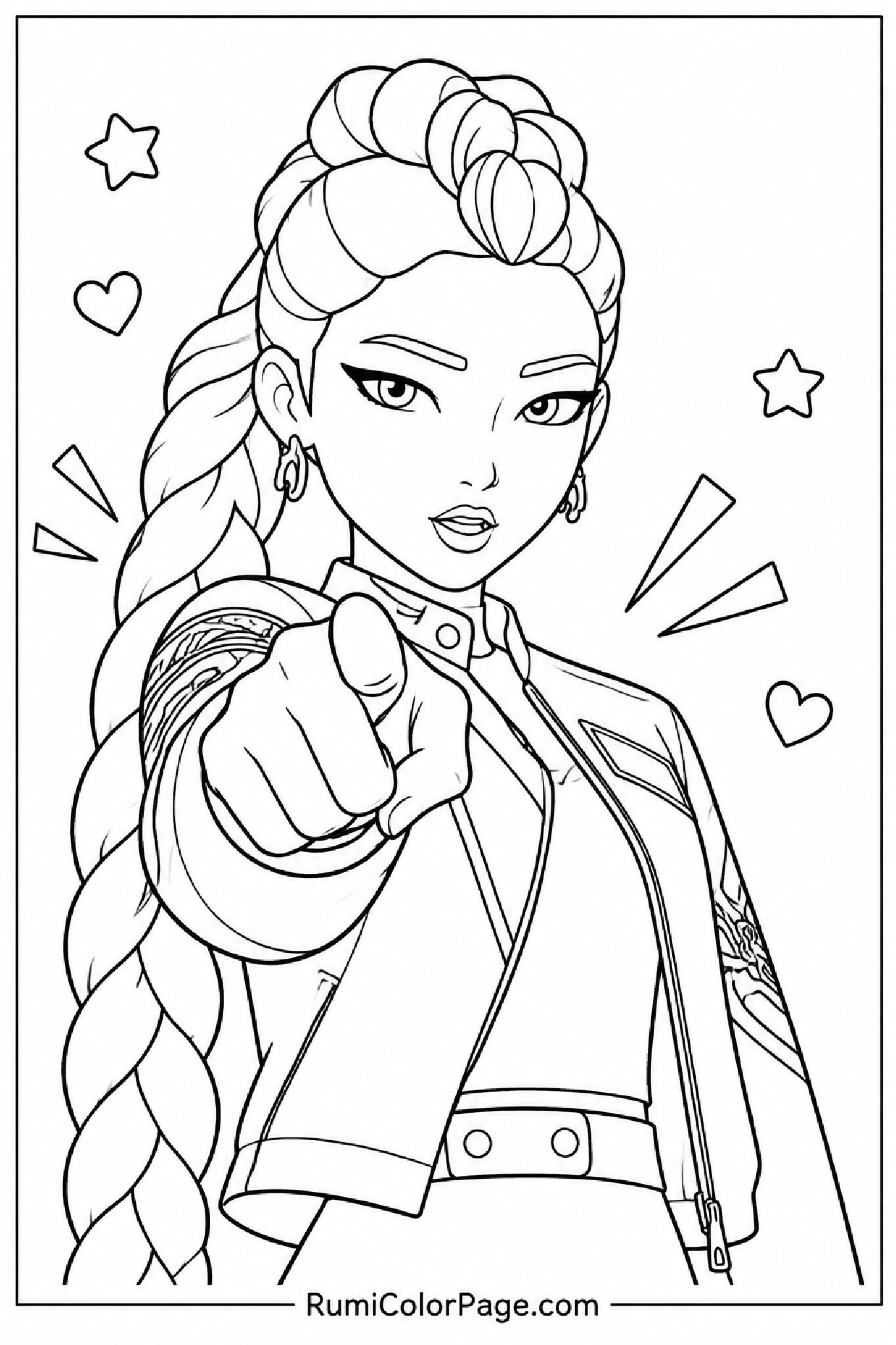
- Rumi Pointing Finger at the Viewer, Straight-On Front View: This direct pose feels especially interactive because the gesture is aimed toward the viewer. It is a good page for experimenting with depth by making the hand slightly brighter or more detailed than the background.
You can keep all ten pages in the same color palette to create a matching set, or treat each one as a separate scene. A smiling version may work well with bright colors, while the smirking or chin-raised versions can look effective with deeper shades and stronger contrast.
Creative Tips for Coloring Your Sheets
The pointing gesture is the most important visual feature in this collection, so your coloring choices can help guide attention toward the hand while still keeping the face and clothing balanced.
1. Make the Pointing Hand the Main Focus
Start by deciding where you want the viewer's eye to go first. Since the pointing finger is the main action in these pages, you can make the hand stand out by keeping the surrounding colors slightly softer.
Use gentle shading between the fingers, along the side of the hand, and beneath the palm. Avoid making every finger the same flat tone. Even a small difference between the light side and shadow side can give the hand more depth.
For poses where the finger points toward the viewer, the hand may appear larger because of perspective. You can reinforce that effect by adding a little more contrast around the hand while keeping the background less detailed.
If Rumi is pointing upward, try adding a lighter area near the raised hand. This can make the direction of the gesture clearer without needing to add complicated scenery.
2. Match Facial Shading and Background Colors to the Expression
Each pointing pose has its own personality, so the facial expression can guide your color palette.
For smiling or friendly poses, try brighter colors such as peach, yellow, light blue, pink, or soft green. These tones can create a playful and welcoming mood.
For confident or smirking poses, deeper colors such as burgundy, navy, purple, dark teal, or warm brown can make the page feel more dramatic.
When coloring the face, begin with a light base tone. Add slightly darker shading below the hairline, under the chin, along the sides of the nose, and near the neck. Keep highlights lighter on the forehead, cheeks, and bridge of the nose.
You can also use the background to support the direction of the finger. For example, diagonal lines can follow the pointing direction, while circles or simple bursts can draw attention toward the hand.
For front-facing pages, a soft gradient behind Rumi can work well. For side-profile poses, try leaving more open space in the direction Rumi is pointing. This can make the composition feel more balanced.
Colored pencils are especially useful for detailed areas such as fingers, eyes, hair, and facial shadows. Markers can work well for larger clothing sections or backgrounds, but it is a good idea to test them first if you are using regular printer paper.
Frequently Asked Questions (FAQs)
How can I make the pointing finger stand out more in these Rumi coloring pages?
Use slightly stronger contrast on the hand and finger than in the surrounding areas. Add soft shadows between the fingers and under the palm, while keeping the background less detailed. For poses where Rumi points toward the viewer, stronger shading around the hand can also help create a sense of depth.
Which colors work best for Rumi pointing finger poses?
The best colors depend on the expression. Bright colors work well for smiling and playful poses, while darker or richer shades can suit confident, smirking, or chin-raised versions. You can also match the background colors to the mood of each illustration.
Which Rumi pointing finger page is easiest for younger colorists?
The straight-on shoulders-up and front-view close-up pages are often easier because they usually contain fewer overlapping body parts. These designs let younger colorists focus mainly on the face, hair, hand, and clothing without needing to fill a large full-body scene.
These Rumi Pointing Finger Coloring Pages combine expressive gestures with a wide range of camera angles and moods. The pointing pose makes the artwork feel more interactive, while the changes in expression and body position keep the collection from becoming repetitive.
Try coloring the same pose more than once using different color palettes. One version can look cheerful and playful, while another can feel bold or dramatic simply by changing the clothing, shadows, and background. This makes the collection useful not only for casual coloring but also for practicing how color can change the mood of an illustration.