What Makes Our Rumi Coloring Sheets Special?
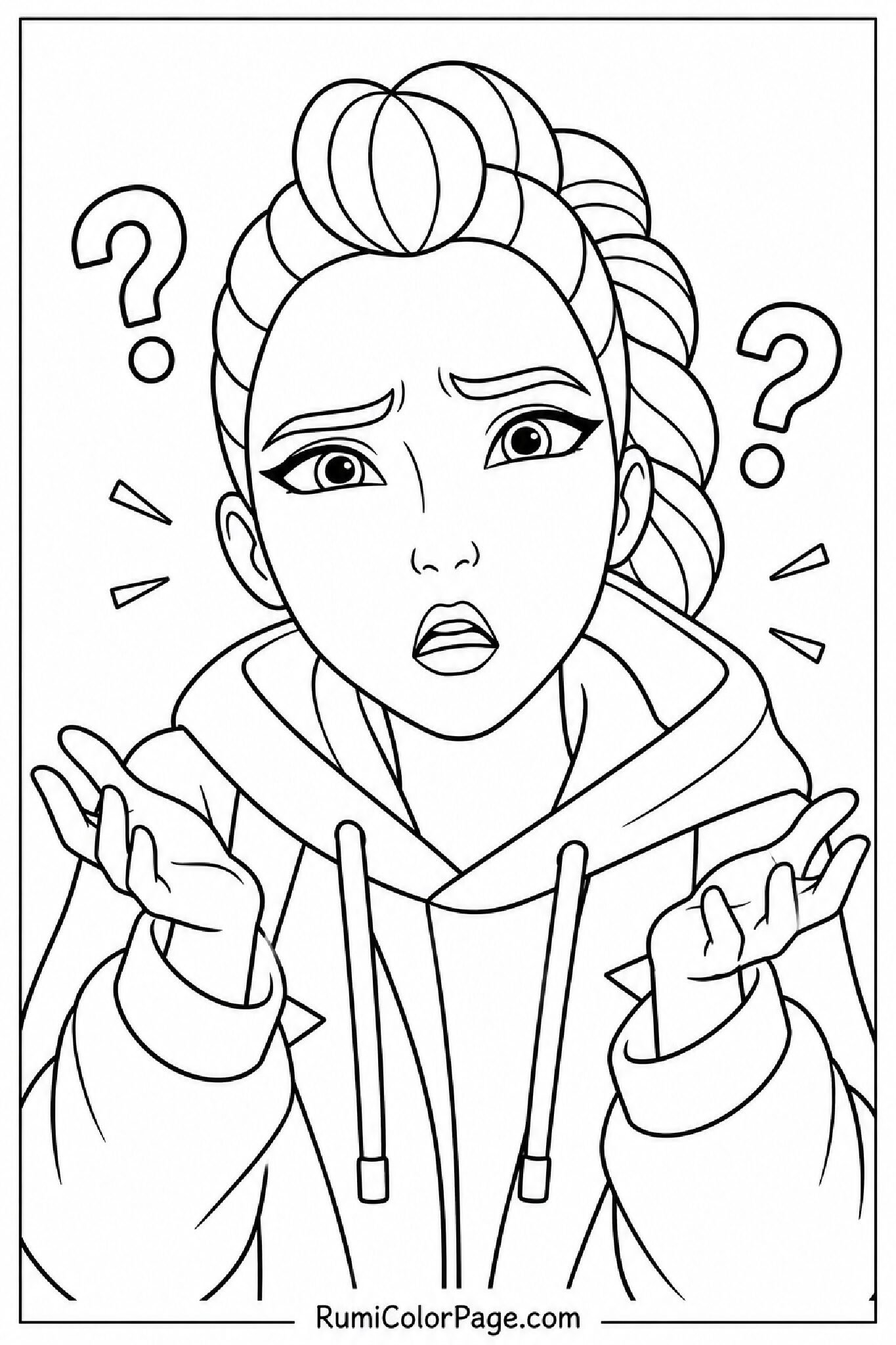
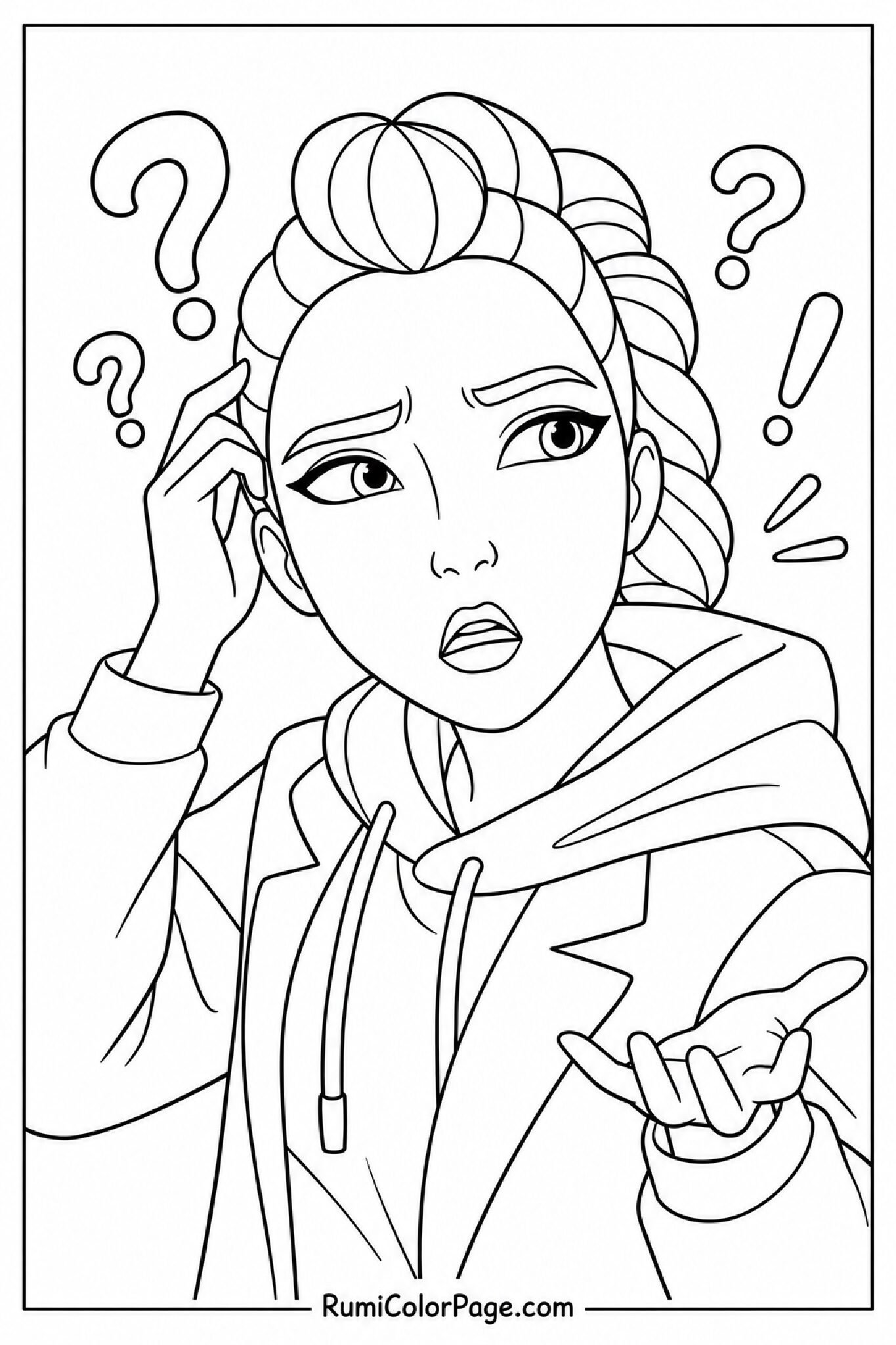
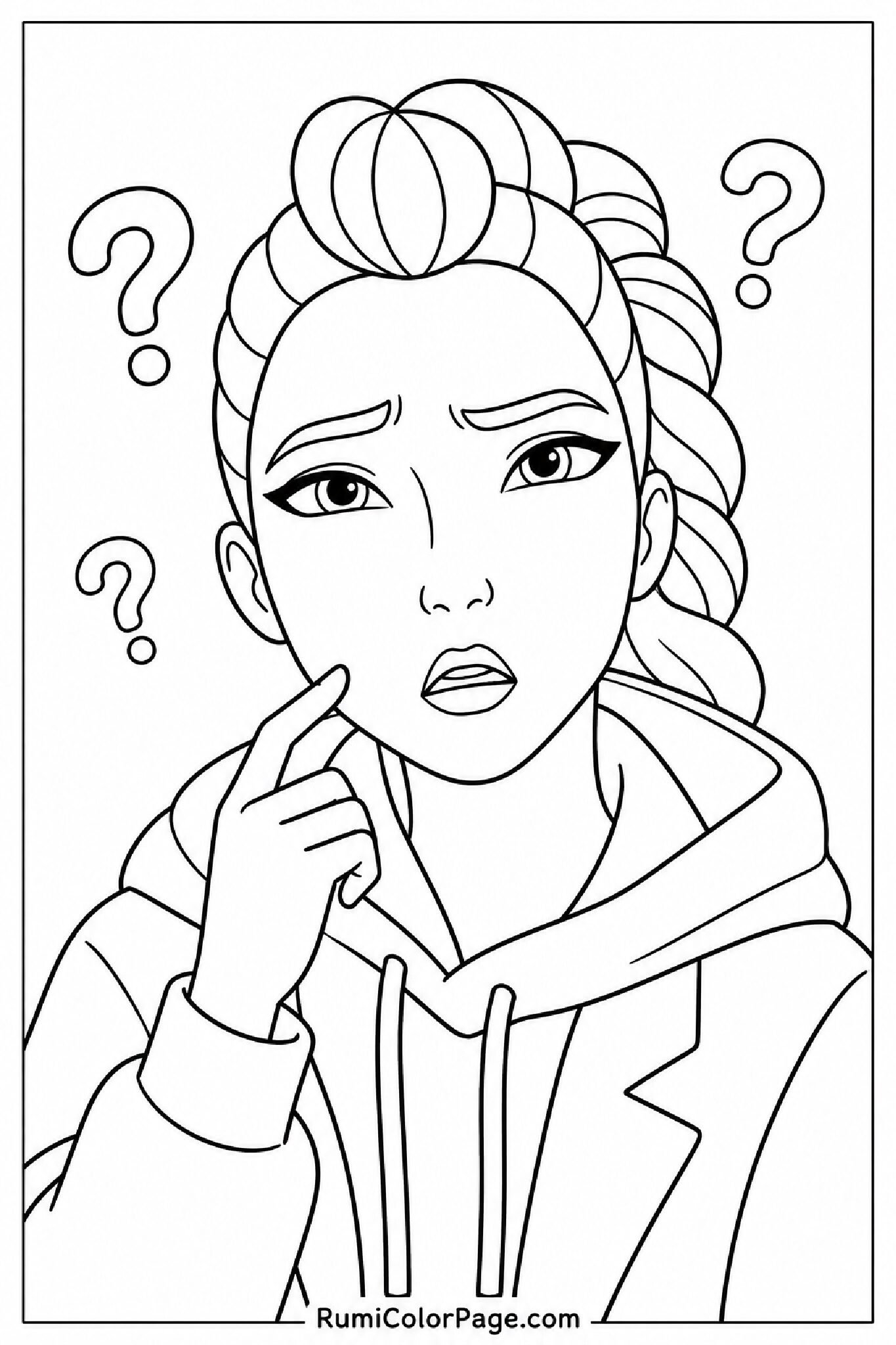
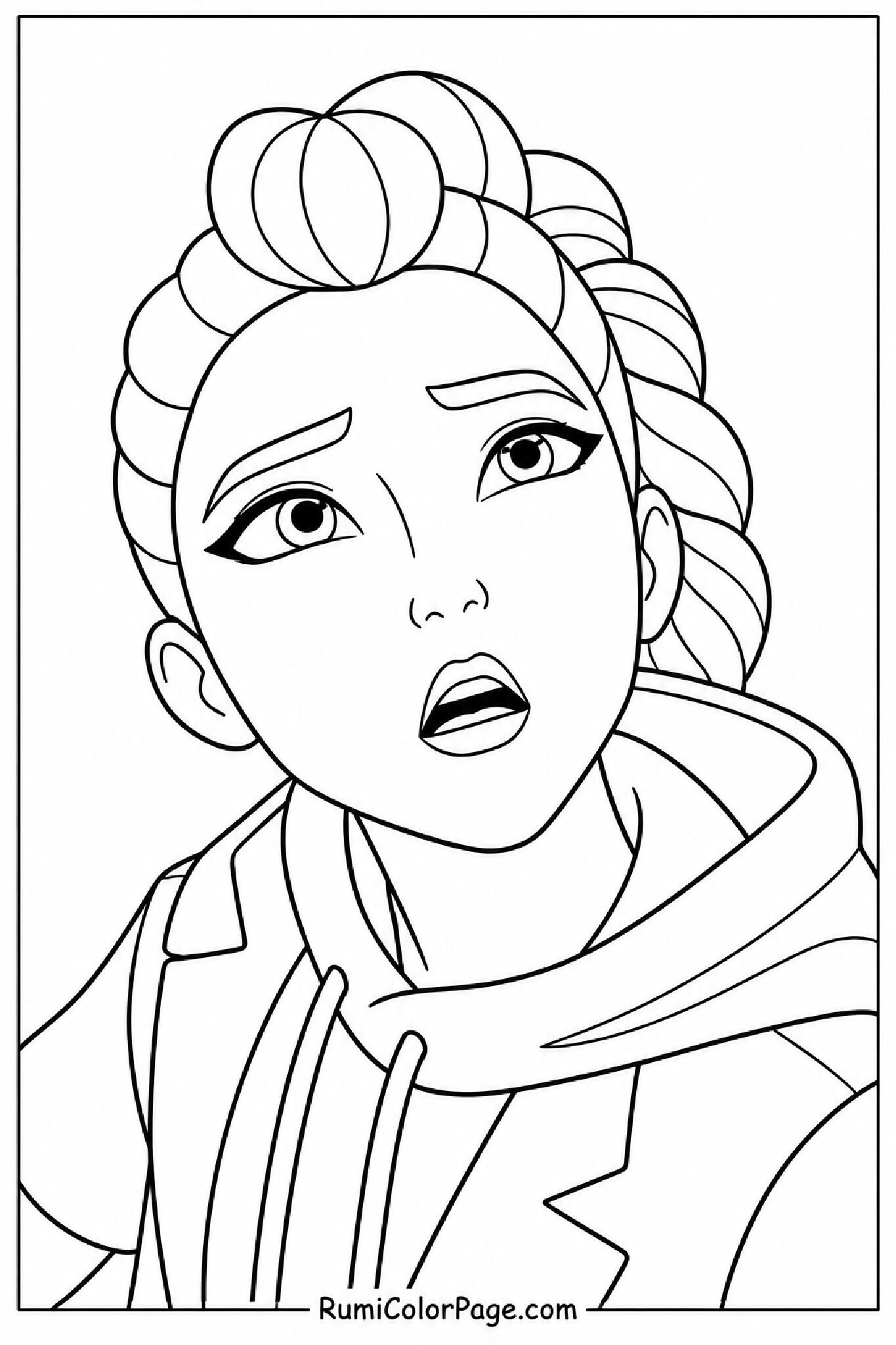
These Rumi coloring sheets focus on expressive reactions rather than repeating the same pose on every page. Raised eyebrows, widened eyes, tilted heads, surprised expressions, and puzzled hand gestures give each illustration a different personality and make the coloring experience more engaging.
The clean line art keeps important facial details easy to recognize while still leaving enough open space for creative coloring. Younger colorists can enjoy the larger shapes, while older kids and more experienced colorists can spend extra time on eye highlights, facial shading, hair details, clothing colors, and backgrounds.
The different viewing angles also provide a useful way to explore how light and shadow change when a face turns, tilts, or looks upward. This makes the collection suitable for casual coloring as well as simple art practice.
Key features of these printable Rumi coloring pages include:
- Clean black-and-white outlines that make facial expressions easy to identify.
- Strong, defined lines suitable for colored pencils, crayons, gel pens, and many markers.
- Printable layouts designed for common home printer paper, including standard Letter-size pages.
- Ten different poses featuring confused, surprised, curious, and uncertain expressions.
- A mix of close-up, half-body, full-body, side-profile, and three-quarter-view compositions.
- Larger open areas for simple coloring combined with smaller facial details for careful work.
- Plenty of space to experiment with skin tones, hair shading, clothing colors, and backgrounds.
- Pages that can be printed again and recolored using completely different palettes.
For the cleanest results, choose a high-quality print setting when possible. Standard printer paper works well for crayons and colored pencils, while slightly thicker paper can be more comfortable for markers or layered pencil work. If you use markers, place an extra sheet underneath the page to help protect the surface below.
Exploring the Confused and Surprised Rumi Collection
This collection includes ten Rumi illustrations built around puzzled reactions, raised eyebrows, surprised eyes, hand gestures, and changing head positions. Each variation offers a slightly different coloring challenge and gives you new opportunities to work with highlights, shadows, and coordinated colors.
- Rumi Looking Confused and Surprised, Front View Close-Up: This direct portrait keeps the facial expression at the center of attention. Pay close attention to the eyebrows, eyes, lips, and subtle facial shadows to make the surprised reaction stand out.
- Rumi Looking Confused and Surprised, Half-Body Slight Left Turn: The slight turn adds depth and gives you more room to color clothing. Try shading the side of the face turned away from the imagined light source a little darker for a more dimensional result.
- Rumi Looking Confused, Eyebrows Raised, Straight-On Shoulders-Up: The raised eyebrows are the key feature in this pose. Keeping the colors around the eyes and forehead slightly lighter can help preserve the open, curious expression.
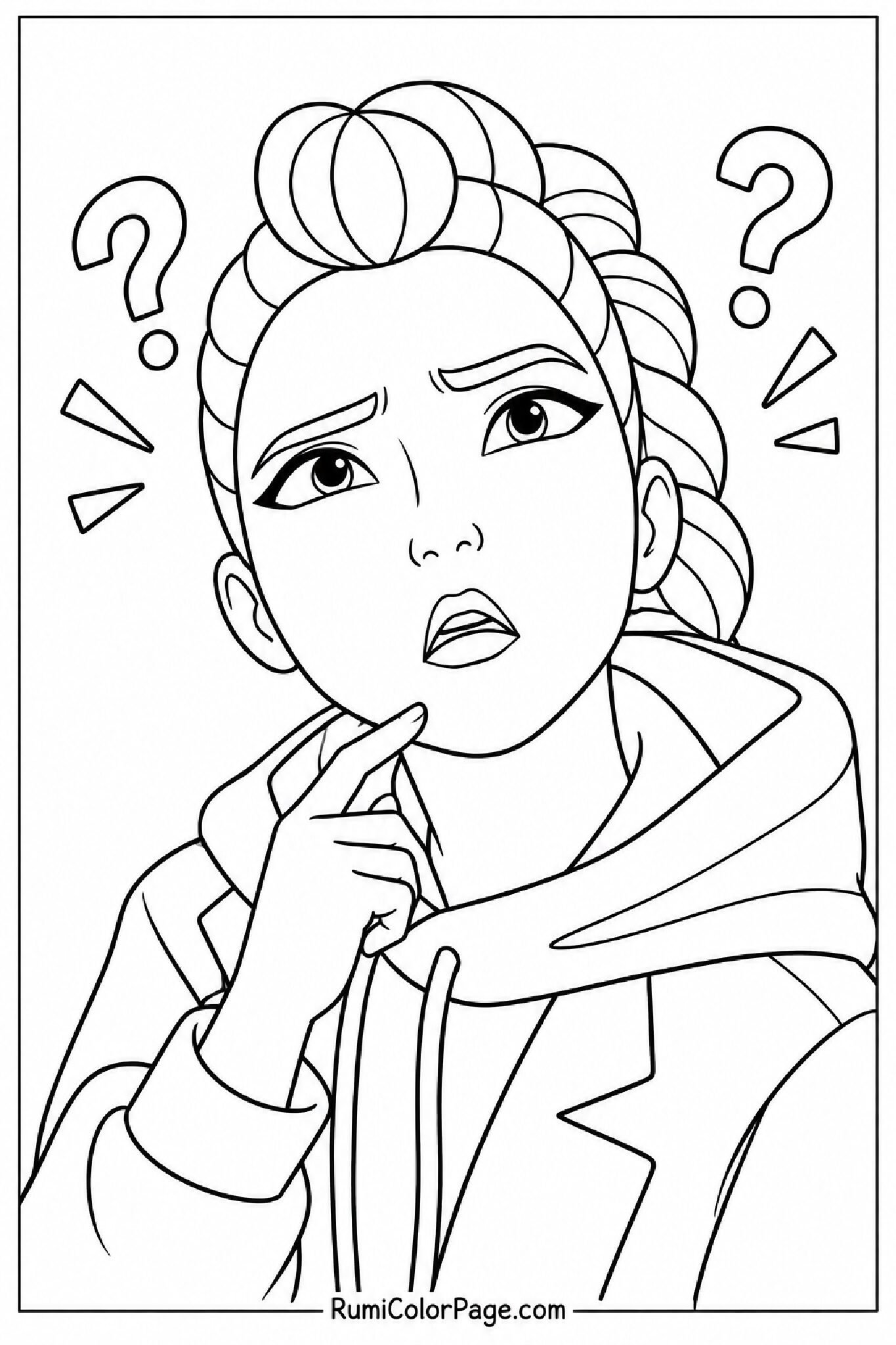
- Rumi Looking Surprised, Mouth Slightly Open, Close-Up Head Tilted Back: The upward head position changes where natural shadows would appear. Add slightly deeper color beneath the chin and around the lower jaw while keeping the upper face brighter.
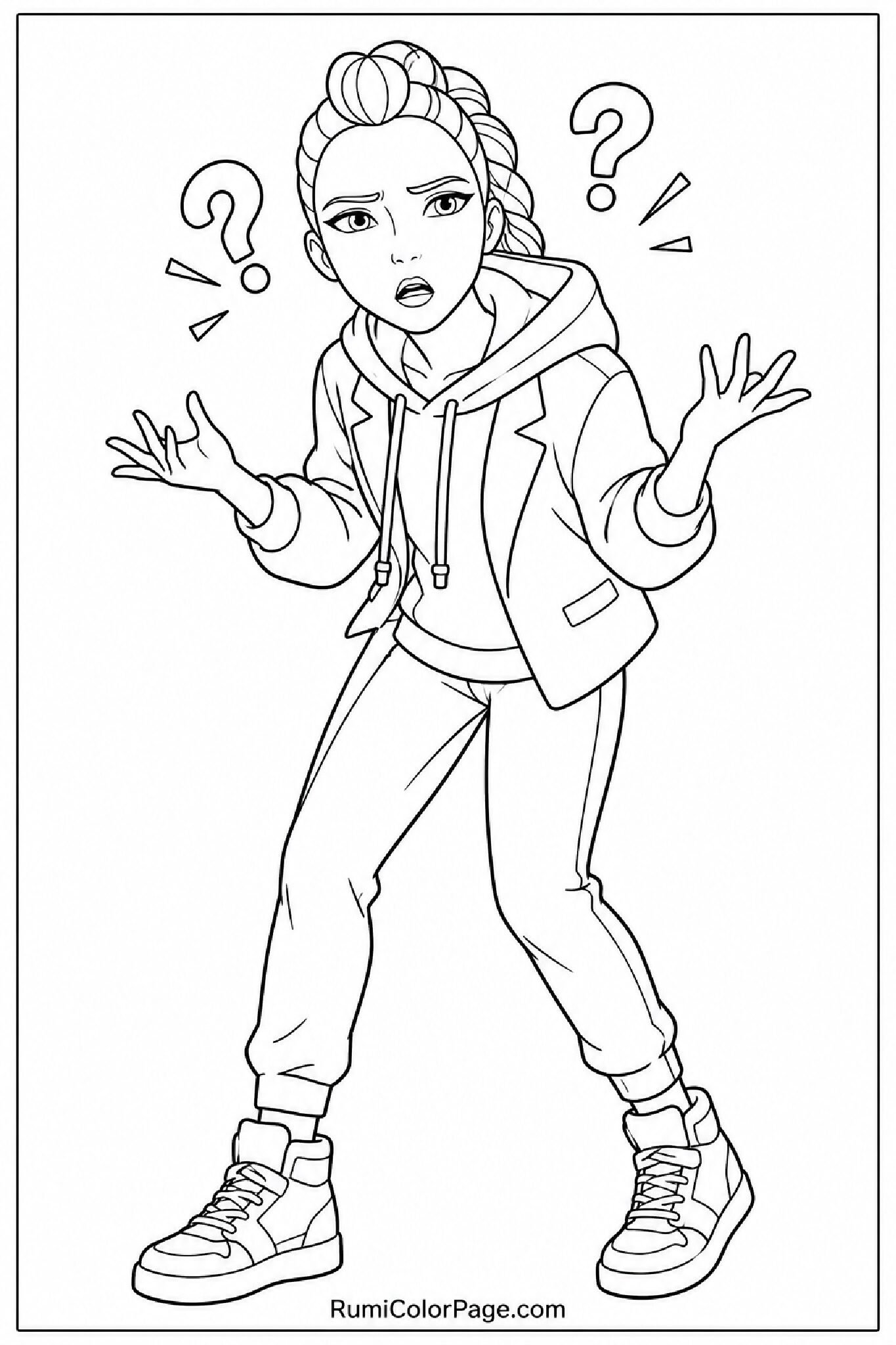
- Rumi Looking Confused and Surprised, Full-Body Slight Right Lean: This variation gives you more space for outfit colors, shoes, and full-body details. It is a good option if you enjoy coordinating clothing colors with the emotion of the character.
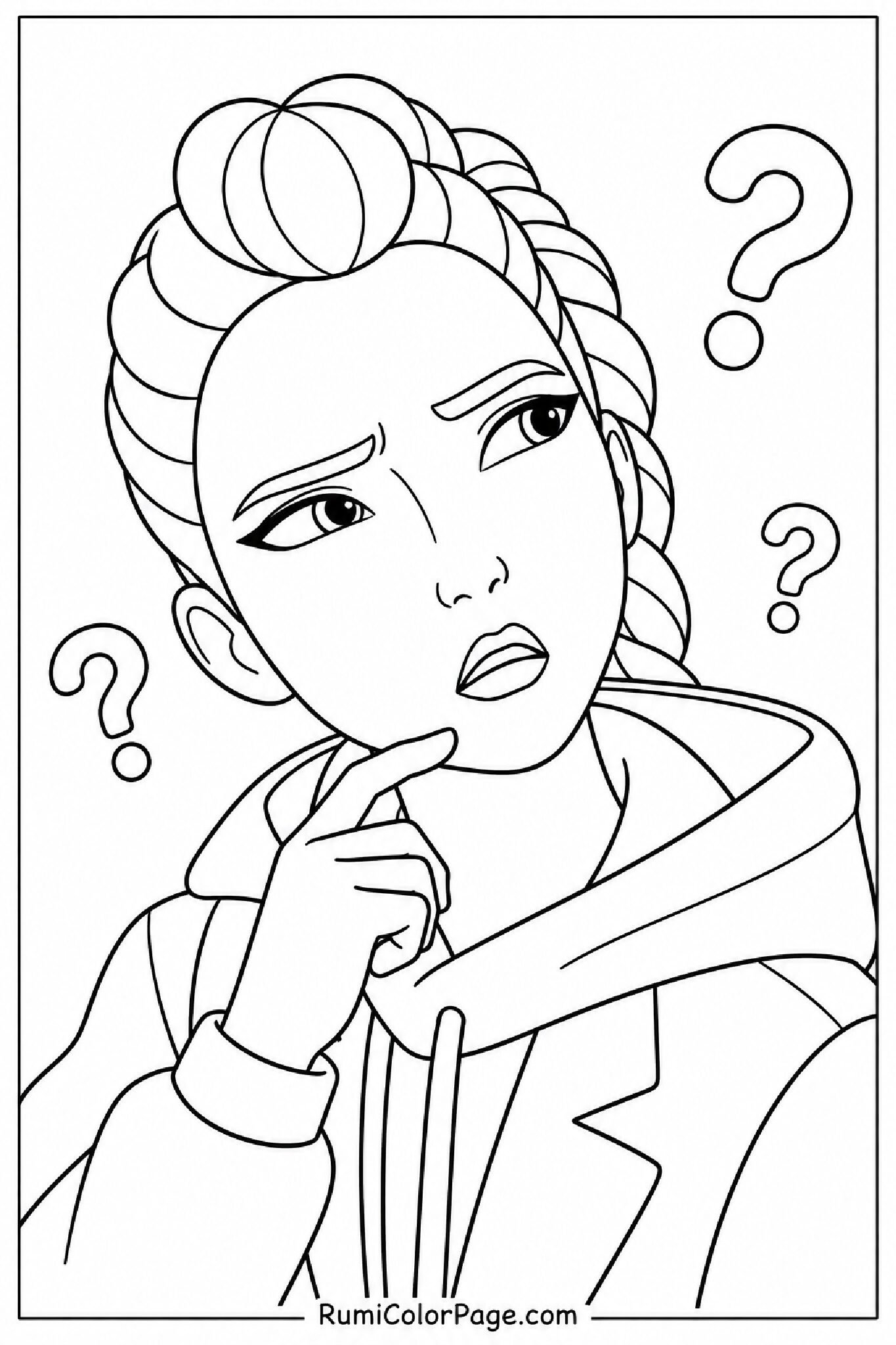
- Rumi Looking Confused, Head Tilted, Three-Quarter Angle Close-Up: The tilted three-quarter view creates a natural sense of movement. Gentle shading on the side of the face farther from the light can make the pose feel more dimensional.
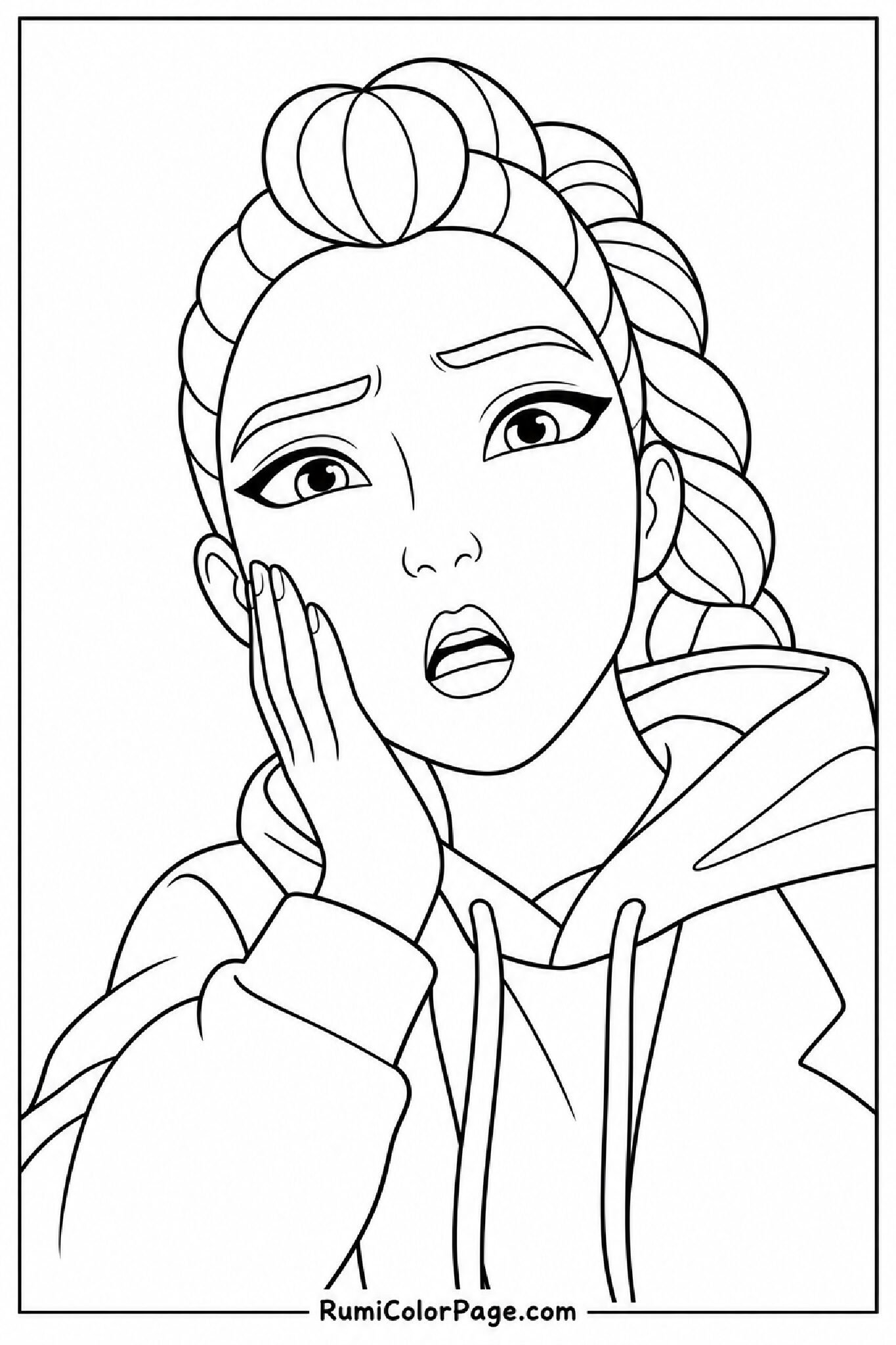
- Rumi Looking Surprised, Hand Near Cheek, Low Angle Close-Up: The hand placement makes the surprised reaction more noticeable. Consider using slightly different tones on the hand, nails, or accessories so the gesture remains easy to see.
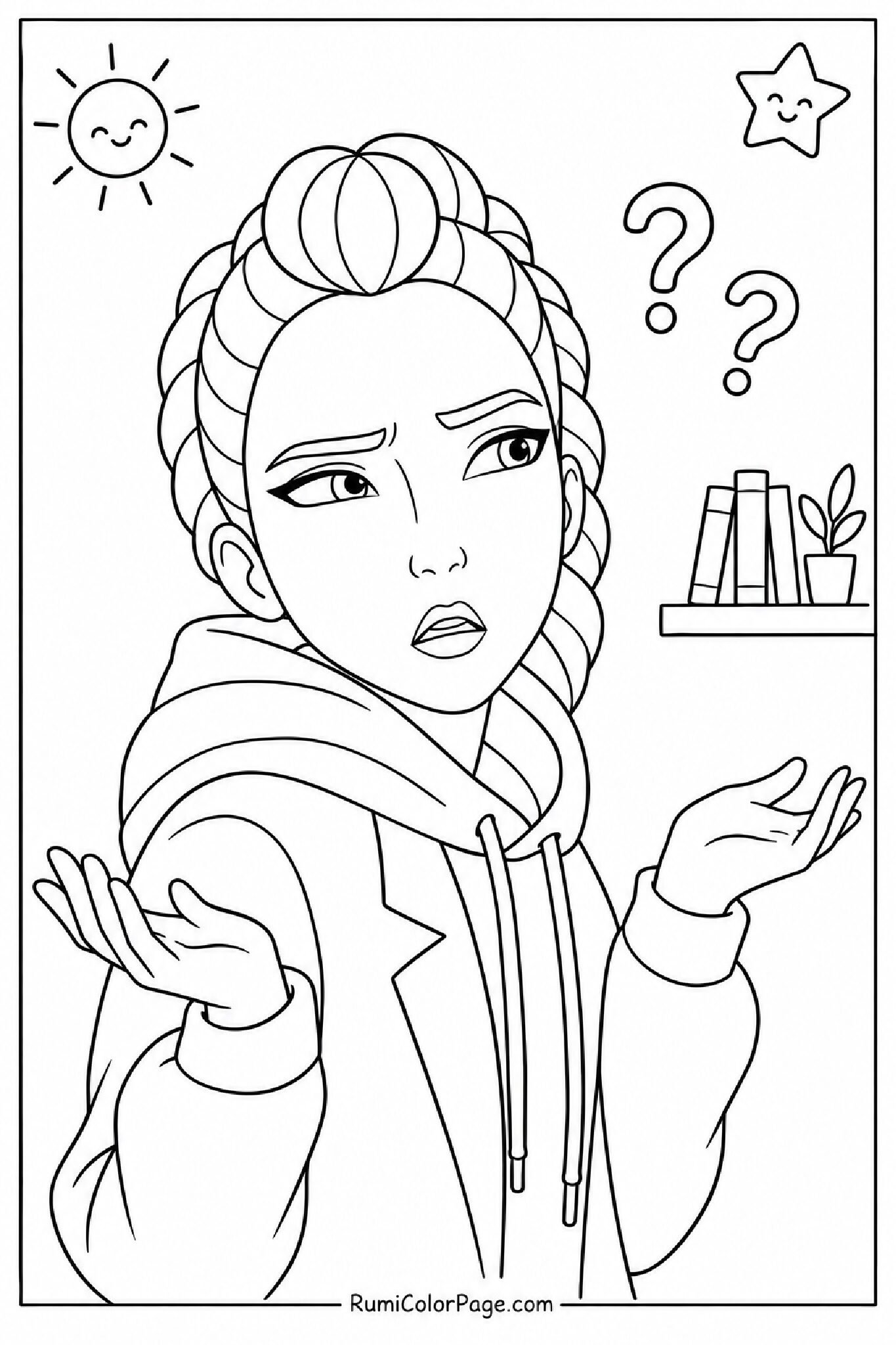
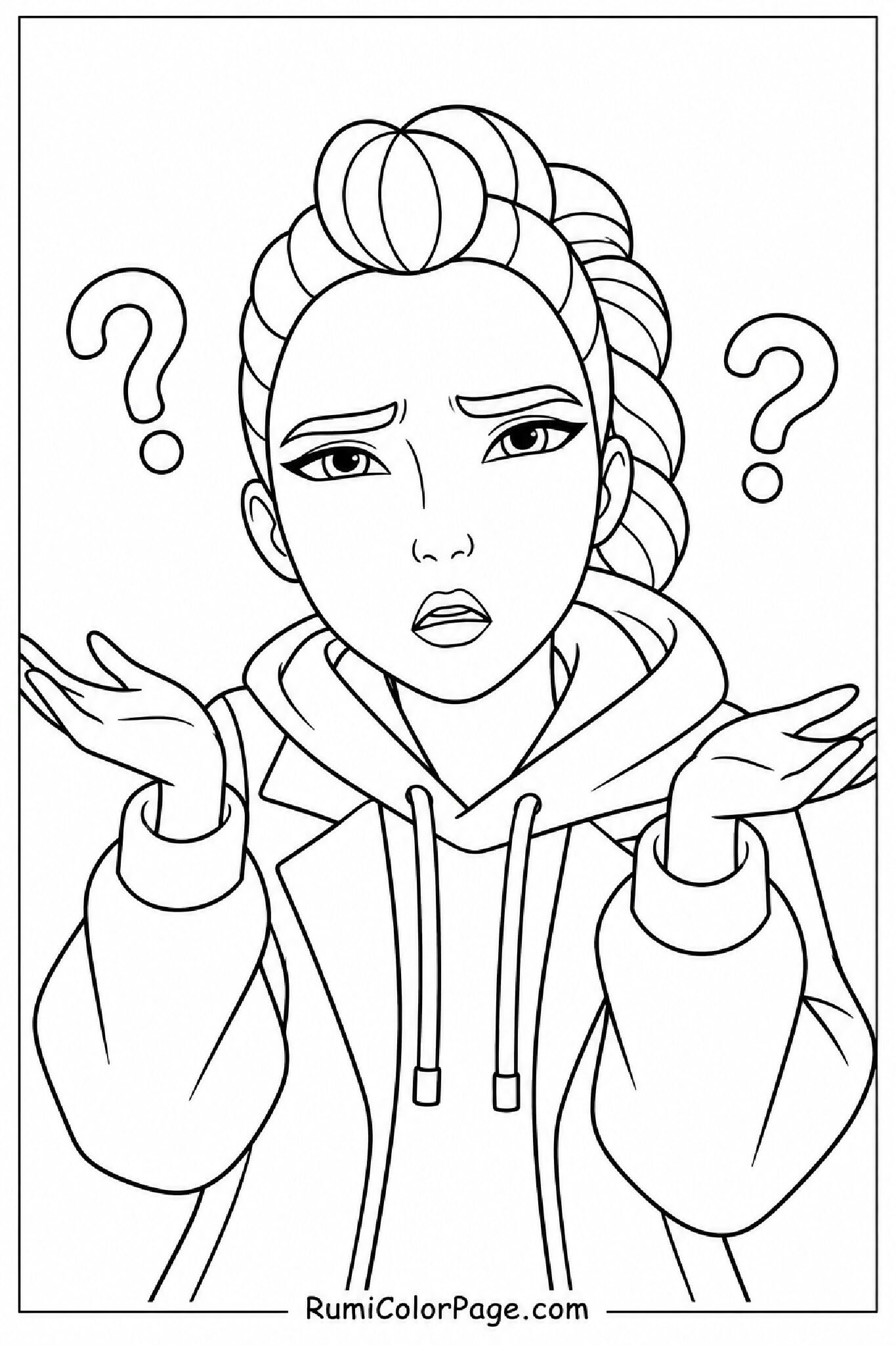
- Rumi Looking Confused, Both Hands Up, Half-Body Side Profile: Both hands add extra storytelling to the pose. Matching or contrasting colors on sleeves, nails, bracelets, or accessories can draw attention to the puzzled gesture.
- Rumi Looking Confused and Surprised, Chin Raised, Close-Up Chin Raised: This pose works well for practicing upward-facing highlights. Add deeper shading beneath the chin while keeping the forehead, nose bridge, and upper cheeks lighter.
- Rumi Looking Confused, Straight-On Front View: The centered composition is balanced and easy to work with, making it a good choice for testing different hair shades, skin tones, eye colors, and background ideas.
You can color all ten pages with one consistent palette to create a matching set, or give each pose a completely different mood. Soft pink, mint, pale yellow, peach, and lavender can create a playful look, while navy, plum, burgundy, teal, or deeper neutral tones can make the expressions feel more dramatic.
Creative Tips for Coloring Your Sheets
Because these pages are built around facial expressions, small details can have a big effect on the finished result. Planning your eye colors, skin tones, hair shades, clothing, and background before you begin can help the page feel more balanced and intentional.
1. Use the Eyes and Eyebrows to Show Surprise
The eyes and eyebrows carry much of the emotion in these illustrations. Start with a lighter color inside the iris, then add a darker ring around the outer edge and pupil.
Leaving a small white highlight can make the eyes appear brighter and more alert. For surprised expressions, try not to make the area around the eyes too dark, because lighter surrounding tones can help the eyes look more open.
Raised eyebrows can also be emphasized with gentle shading underneath them. A slightly darker tone below the brow can create depth without changing the original expression.
Colored pencils are especially useful for this area because they allow you to build color gradually and keep control around small facial details.
2. Make the Confused Expressions Feel Natural
Confused expressions often rely on subtle details rather than heavy shading. A tilted head, raised eyebrow, or slightly open mouth can already communicate the mood clearly.
Use soft shadows around the nose, jaw, cheeks, and under the chin instead of applying dark color across the entire face. This keeps the expression readable while adding enough depth to prevent the portrait from looking flat.
For a playful look, try warm peach, rose, or golden tones on the cheeks. A small amount of blush can make the surprised or puzzled expression feel more animated.
If you enjoy stylized coloring, you can also experiment with fantasy skin tones or unusual eye colors while keeping the highlights consistent across the face.
3. Choose Clothing Colors That Match the Mood
The full-body and half-body poses give you more room to use outfit colors as part of the emotional theme.
Bright yellow, coral, turquoise, pink, and mint can make the surprised expressions feel cheerful or playful. Deeper blue, purple, charcoal, burgundy, and teal can make the same poses feel more serious or mysterious.
Try limiting the outfit to two or three main colors. A smaller palette often looks more coordinated than using a different shade in every clothing section.
Repeating one clothing color in the background, hair accessories, or nails is another easy way to create a more polished finished page.
4. Use Backgrounds to Support the Expression
A simple background can make the confused and surprised expressions more noticeable without distracting from Rumi.
Try adding question-mark-inspired shapes, stars, circles, soft bursts, abstract lines, or a gentle gradient behind the character. These small details can reinforce the feeling of curiosity and surprise.
Keep the background lighter when you use darker colors on Rumi. If the character is colored in pale shades, a slightly stronger background can help the silhouette stand out.
You do not need to fill every empty area. Leaving some white space can keep the page clean and direct more attention toward the facial expression.
5. Pick the Right Tools for Small Facial Details
Sharp colored pencils are useful around the eyes, eyebrows, lips, fingers, and hairline because they provide more control than broad crayons or thick markers.
Fine-tip markers can work well for clothing accents and background details, but test them on spare paper first if you are unsure how much the ink may bleed.
Gel pens are useful for tiny highlights, jewelry, nail accents, or decorative background elements. Metallic or white gel pens can add small finishing details once the main coloring is complete.
If you enjoy layered pencil work, slightly heavier matte paper can provide a sturdier surface and hold repeated shading better than very thin printer paper.
Frequently Asked Questions (FAQs)
How can I make Rumi's confused and surprised expression stand out more when coloring?
Focus on the eyes, eyebrows, and mouth. Keep the area around the eyes relatively light, use a darker outer ring around the iris, and leave a small white highlight if possible. Gentle shading beneath raised eyebrows and under the chin can also add depth without overpowering the expression.
What colors work well for confused and surprised Rumi coloring pages?
Bright colors such as coral, yellow, turquoise, pink, mint, and lavender can create a playful or curious mood. Deeper shades like navy, plum, burgundy, charcoal, and teal can make the expression feel more dramatic. Repeating a small group of colors across clothing, accessories, and backgrounds can help the finished page look more coordinated.
Which coloring tools are best for the small facial details on these pages?
Sharpened colored pencils are especially useful for eyes, eyebrows, lips, hair strands, and facial shading. Fine-tip markers can work well for small clothing or background details, while gel pens are useful for highlights and accents. If you use markers, place a spare sheet beneath the printed page to help prevent ink transfer.