
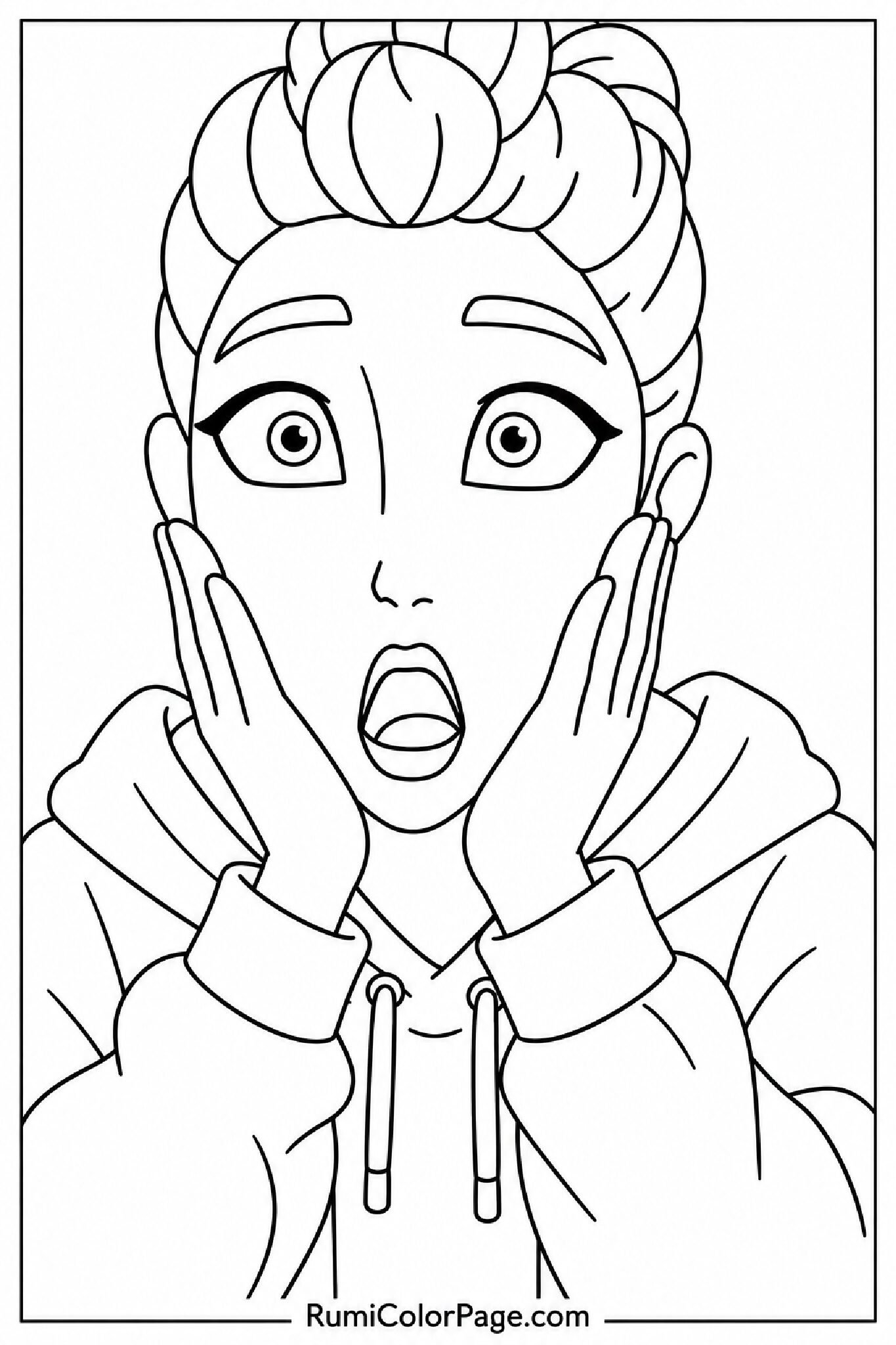
What Makes Our Rumi Coloring Sheets Special?
Our Rumi coloring sheets are designed to make home printing and creative coloring simple. The surprised-expression illustrations feature clear outlines and easy-to-recognize facial details, helping colorists concentrate on Rumi's eyes, eyebrows, mouth, hairstyle, clothing, and body language without an overly cluttered page.
The variety of viewing angles also makes the collection more interesting. Instead of receiving several nearly identical drawings, you can choose between close-ups, half-body poses, side views, raised-hand reactions, and a full-body surprised pose.
- Clear, bold outlines: Strong line work makes important facial features and clothing details easier to see while coloring.
- Printer-friendly layouts: The pages are suitable for common home-printing setups and can be printed on standard Letter-size paper.
- Different difficulty levels: Close-up designs are useful for detailed facial coloring, while larger full-body poses provide more room for clothing and background creativity.
- Useful for several coloring tools: Try crayons, colored pencils, gel pens, or washable markers depending on your paper.
- Reusable creative possibilities: Print another copy and completely change Rumi's clothing palette, background, lighting, or surprised mood.
- Clean coloring areas: Open spaces make it easier for younger colorists to stay inside the lines while still providing enough detail for older fans.
For the cleanest result, use your printer's high-quality or best-quality setting when available. If the image looks stretched, choose a setting such as Fit to Page rather than manually enlarging the artwork beyond the printable area.
Exploring the Surprised Expression Collection
Each printable on this page presents Rumi's surprised reaction from a different angle or pose. That variation gives you more than just new outlines—it changes which parts of the expression receive the most attention.
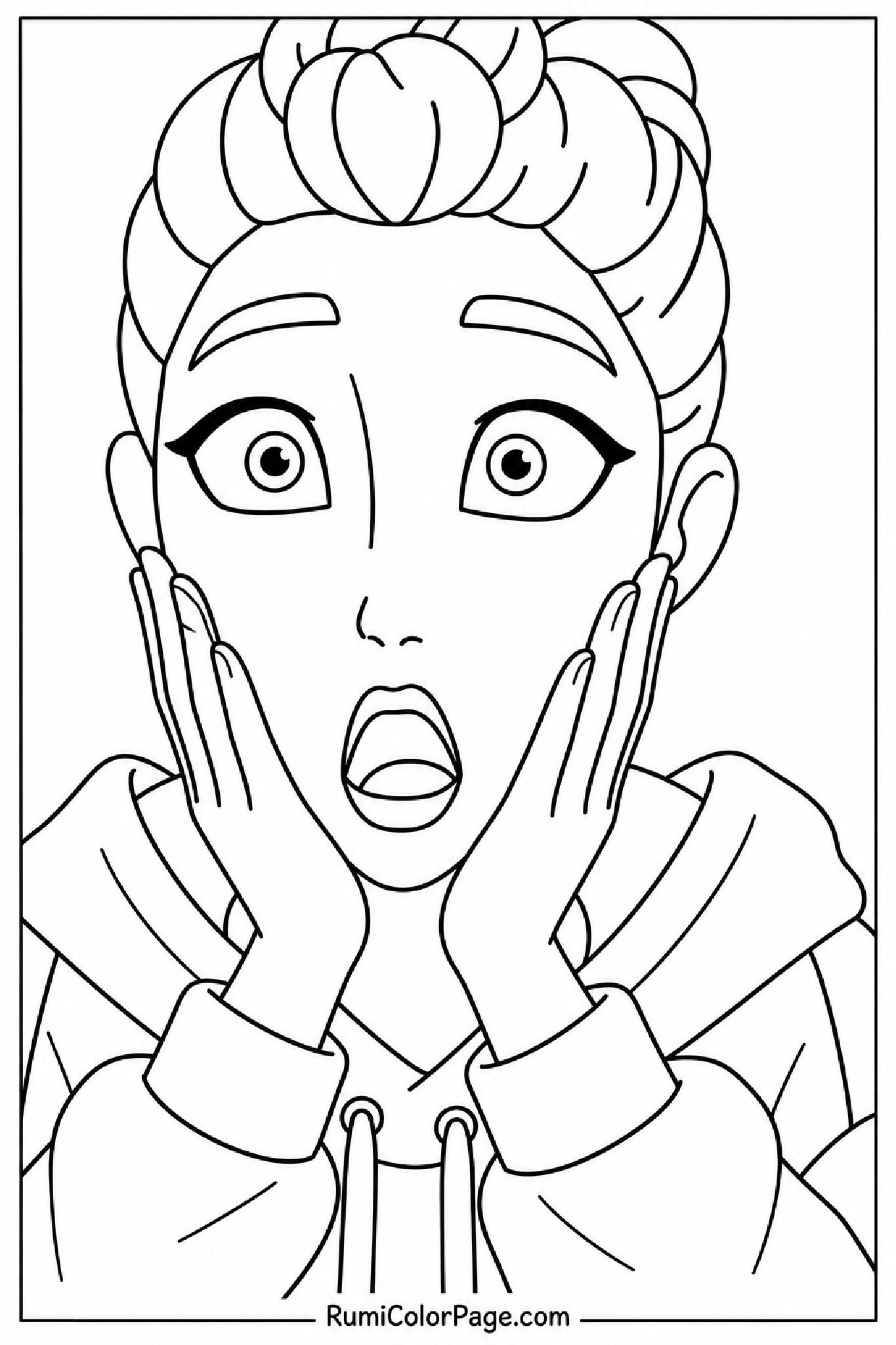
- Rumi With Surprised Expression, Front View Close-Up: A face-focused design where the eyes, raised brows, mouth, and hairstyle become the main coloring areas. This version works well for experimenting with facial shading and eye highlights.
- Rumi With a Surprised Expression, Half-Body Slight Left Turn: The slight turn introduces more depth than a straight-on portrait. Try making the side facing your imagined light source brighter and adding gentle shadows to the opposite side.
- Rumi With Surprised Expression, Eyebrows Shot Up, Straight-On Shoulders-Up: Raised eyebrows are the star of this design. Keeping the area around the eyes bright can help emphasize the sudden, startled reaction.
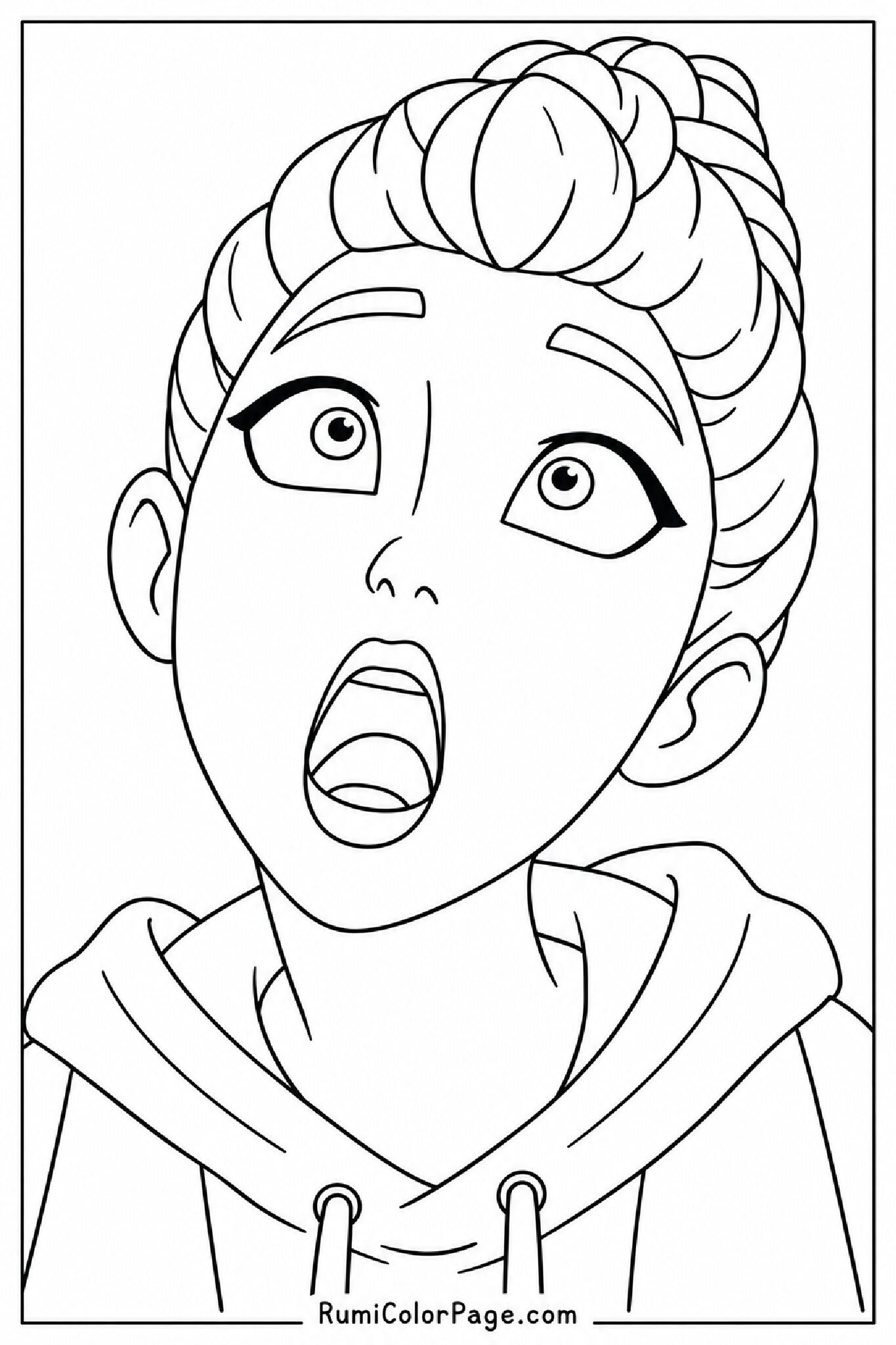
- Rumi With Surprised Expression, Mouth Open Wide, Close-Up Head Tilted Back: This exaggerated reaction creates a dramatic coloring opportunity. The tilted head can be enhanced with stronger shadows under the chin and around the hairline.
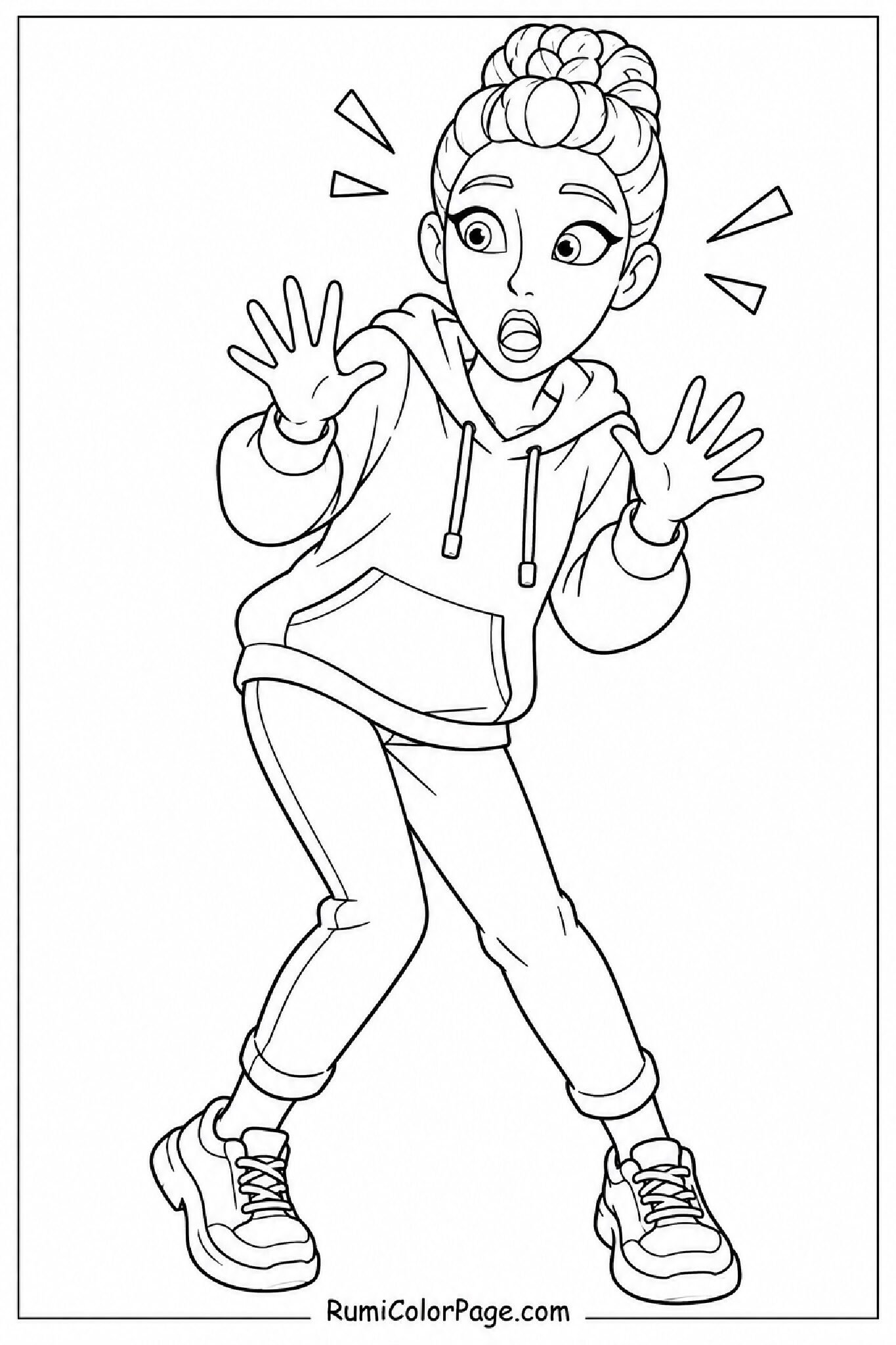
- Rumi With Surprised Expression, Full-Body Slight Right Lean: A wider composition that lets you color the entire outfit along with Rumi's surprised body language. A simple floor shadow can make the leaning pose feel more grounded.
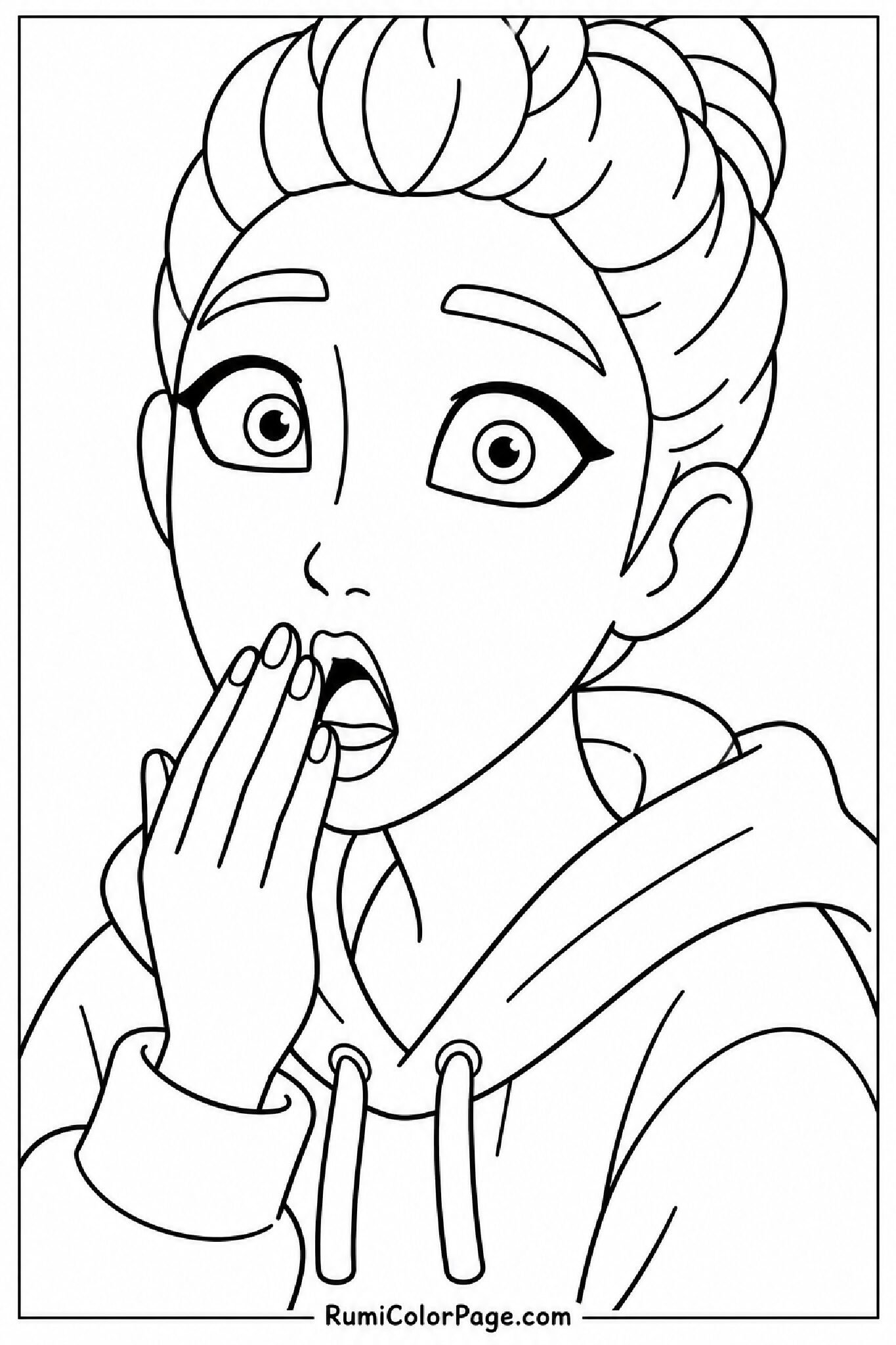
- Rumi With Surprised Expression, Hand Near Mouth, Three-Quarter Angle Close-Up: The hand-near-mouth gesture adds another storytelling detail. Consider using soft skin-tone shading around the fingers while keeping the face slightly brighter.
- Rumi With Surprised Expression, Stepping Back Slightly, Low Angle Close-Up: The backward movement makes this drawing feel like Rumi has just noticed something unexpected. Motion lines or a dramatic background can strengthen the sense of sudden surprise.
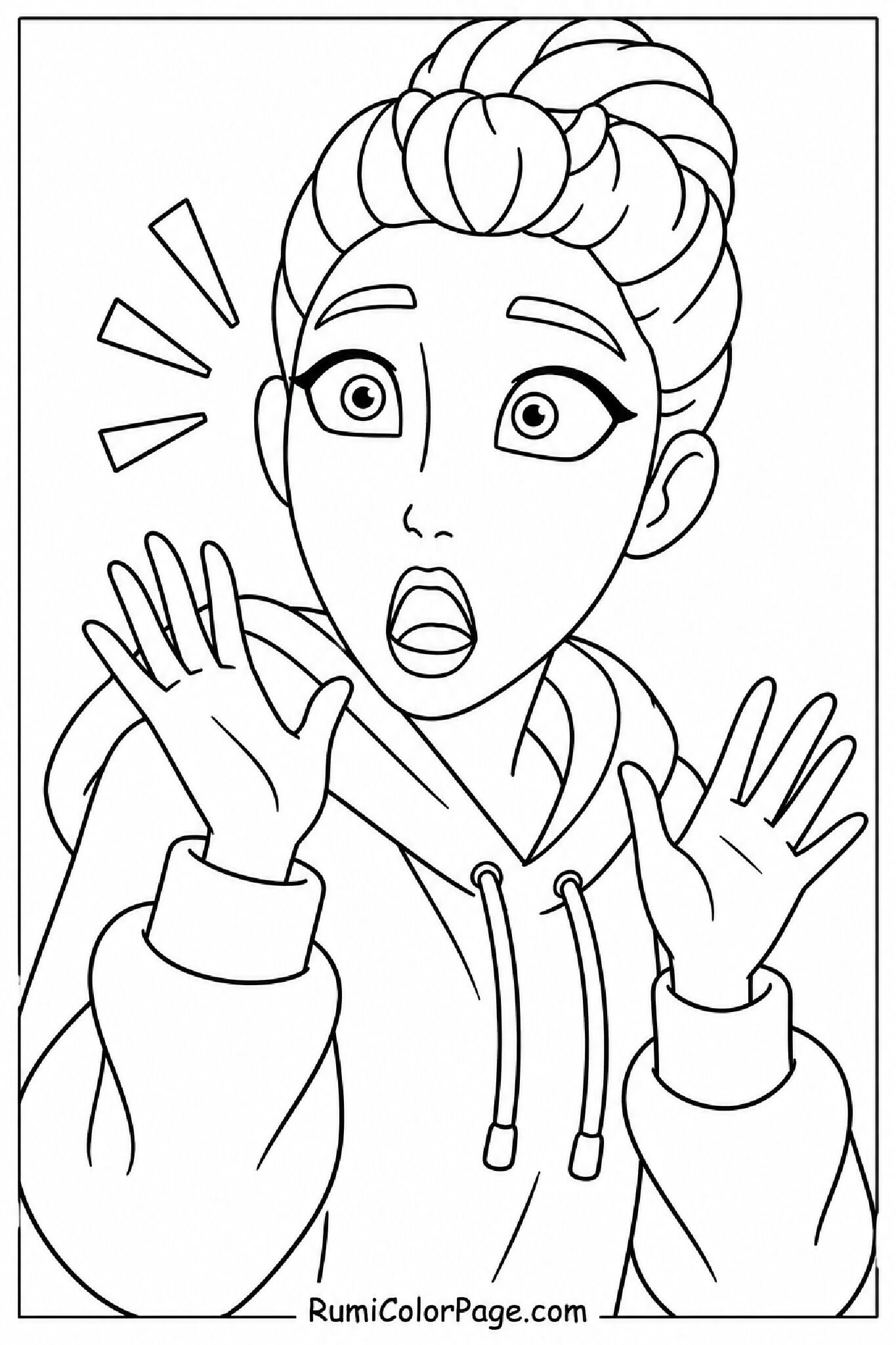
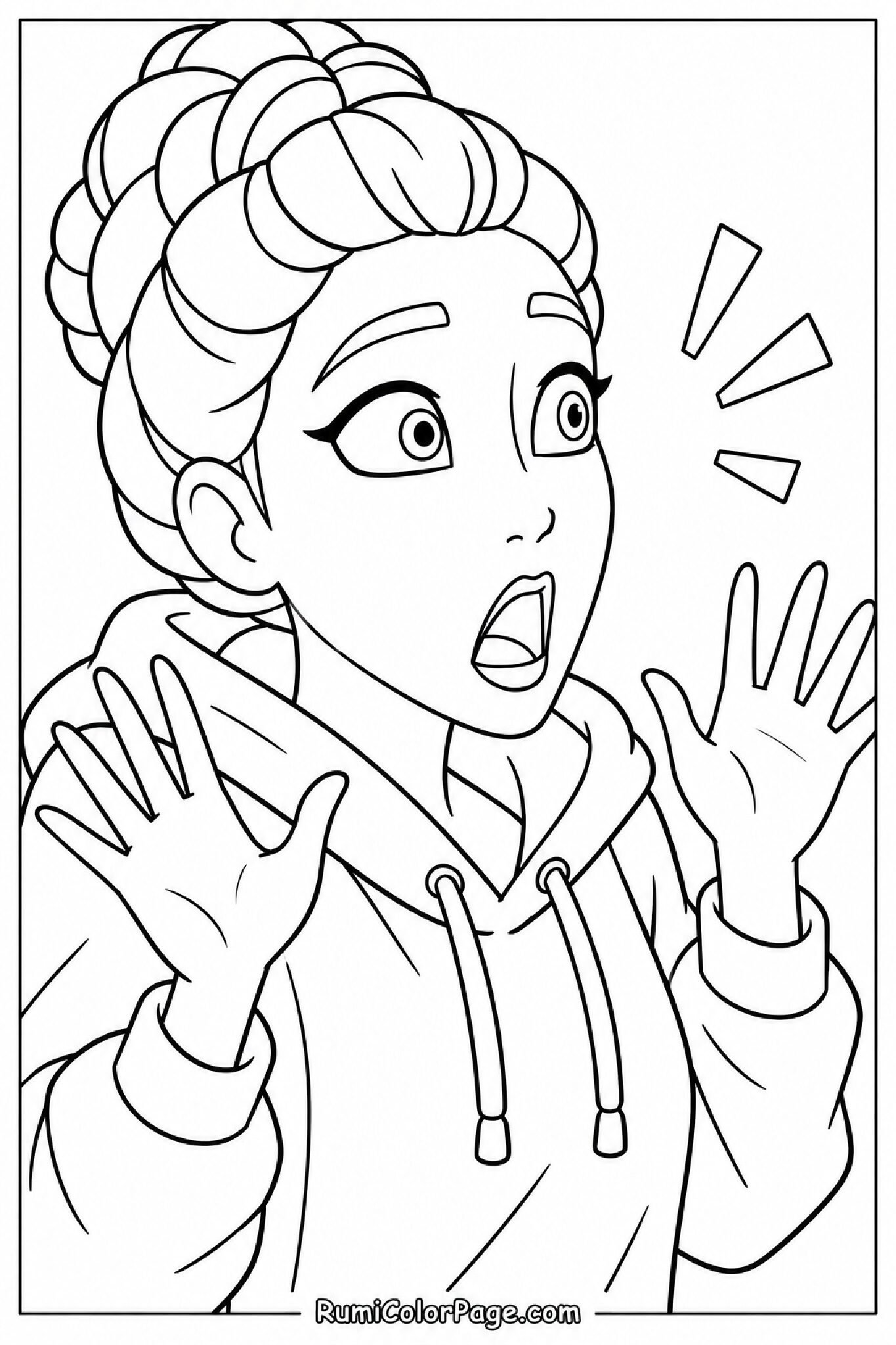
- Rumi With Surprised Expression, Both Hands Raised, Half-Body Side Profile: Raised hands add energy to the reaction. This pose is a good choice for contrasting sleeve colors against a lighter or darker background.
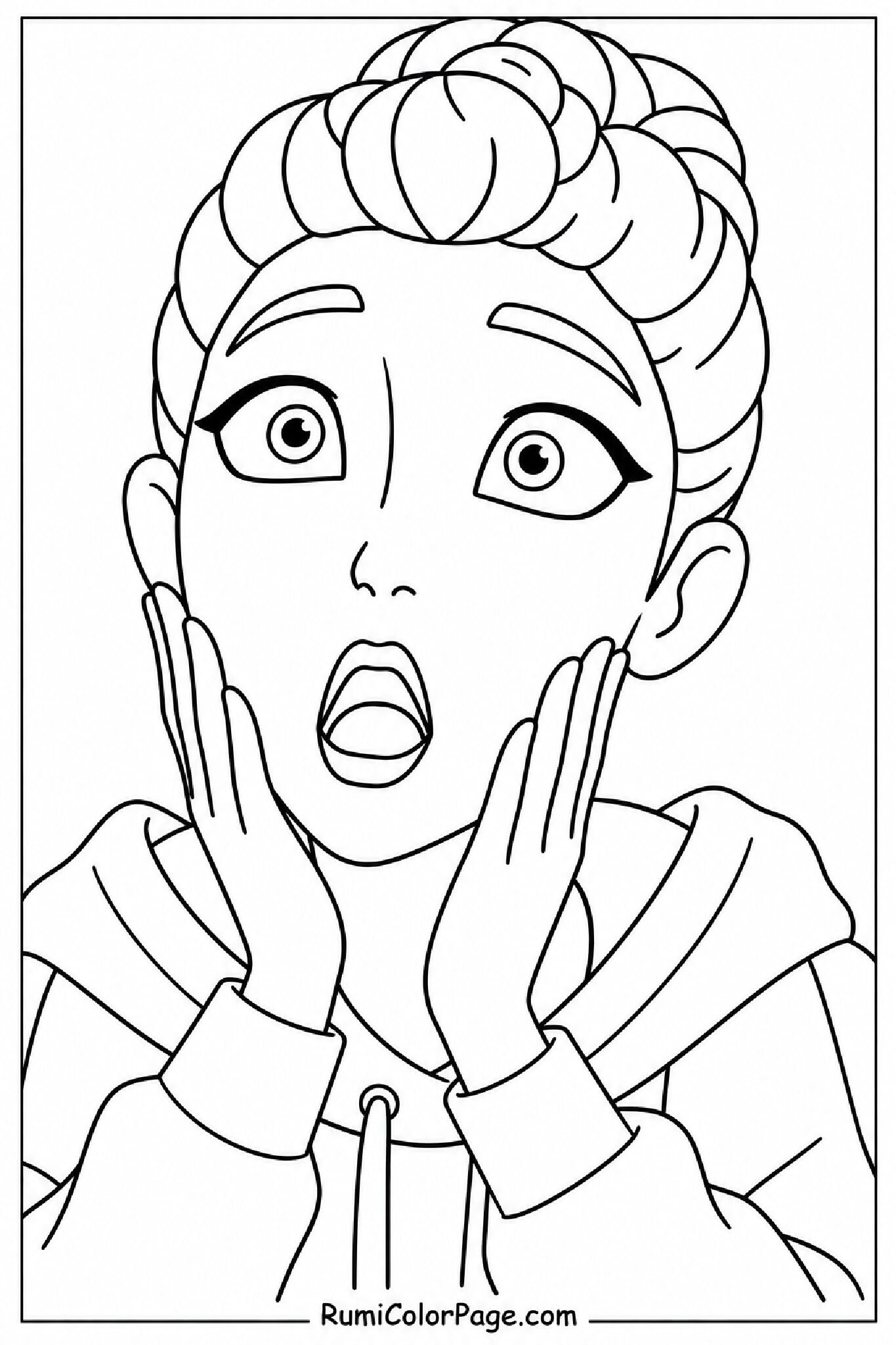
- Rumi With Surprised Expression, Chin Raised, Close-Up: The raised chin changes how shadows fall across the face. Try placing a small amount of shading below the jaw to create depth without hiding the facial expression.
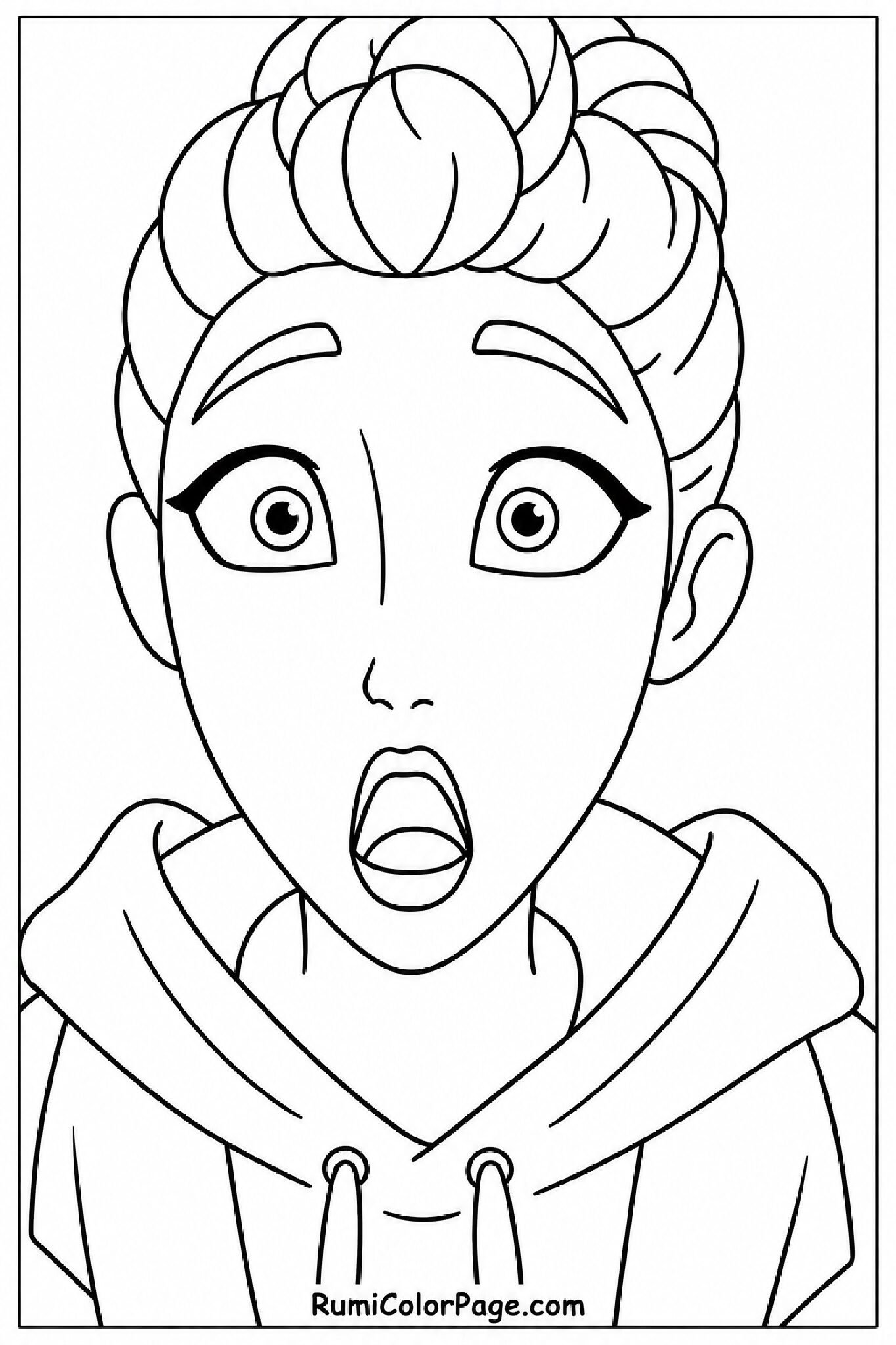
- Rumi With Surprised Expression, Straight-On Front View: A balanced front-facing option that gives you plenty of freedom to create your own color scheme. It is also a useful design for beginners who prefer clearly separated coloring areas.
You do not have to color every version in the same way. One Rumi picture could use cheerful pastel shades, another could feature bold comic-inspired colors, and another could use a darker palette for a dramatic reaction scene.
Creative Tips for Coloring Your Sheets
1. Make the Surprised Expression the Focal Point
When coloring an expressive face, avoid making every area equally dark or detailed. The viewer's attention should naturally move toward Rumi's wide eyes, raised eyebrows, and open-mouth reaction.
Start with the face before adding a complex background. Use lighter pressure with colored pencils around the cheeks and forehead, then gradually add slightly deeper tones around the hairline, below the chin, and near the sides of the face. Layering several light strokes usually creates a smoother result than pressing hard immediately.
For the eyes, leave tiny areas of white paper uncolored to create natural-looking highlights. These highlights can make the surprised expression appear brighter and more animated.
The open mouth can also benefit from contrast. Use deeper shades inside the mouth while keeping nearby skin areas lighter. This simple difference in value helps the expression remain clear even from a distance.
2. Use Hair, Clothing, and Background Colors to Control the Mood
The same surprised Rumi drawing can tell completely different stories depending on your palette. For a cheerful reaction, experiment with warm yellows, pinks, turquoise, lavender, or other bright combinations. For a tense or mysterious surprise, try dark blues, muted purples, gray tones, or stronger shadows.
Hair can be shaded by following the natural direction of the strands rather than filling each section with one flat color. Begin with a lighter base, then add darker strokes near overlapping hair sections, the roots, and areas farther away from your imagined light source.
Clothing provides a good place for stronger colors because it will not compete as much with the facial expression. Try keeping the face slightly softer while giving the outfit a richer color palette.
Backgrounds do not need to be complicated. Stars, burst lines, question marks, small sparkles, speed lines, or abstract shapes can visually communicate surprise without filling every blank area.
If you are using markers, place an extra sheet of paper underneath your coloring page because some inks may bleed through thinner printer paper. Colored pencils are better when you want smoother blending and greater control over small facial details.
For a more polished result, consider printing on slightly heavier paper when your printer supports it. Heavier paper can handle repeated pencil layering and some marker techniques better than very thin copy paper.
Frequently Asked Questions (FAQs)
Which Rumi surprised-expression coloring page is easiest for beginners?
The straight-on front view and shoulders-up designs are good starting points because the main facial features are clearly visible and the coloring areas are easy to identify. Beginners can first color the face, hair, and clothing before adding a simple background. The more angled poses can be explored later when you want to practice extra shading and depth.
How can I make Rumi's surprised expression look more dramatic after coloring?
Concentrate contrast around the eyes, eyebrows, and mouth. Keep small highlights in the eyes, use slightly deeper shading around the hairline and beneath the chin, and consider adding simple background effects such as burst lines, motion marks, stars, or bold abstract shapes. These details can strengthen the feeling that Rumi has suddenly seen or heard something unexpected.
What coloring tools work best for the close-up surprised Rumi pages?
Colored pencils are particularly useful for close-up pages because they give you precise control around the eyes, eyebrows, fingers, mouth, and hair. Crayons are a simple option for younger colorists, while markers can create brighter, stronger colors. If using markers, test them first and place scrap paper underneath the printed sheet to protect the surface below.